

Written By Ella Fortine, Staff Writer
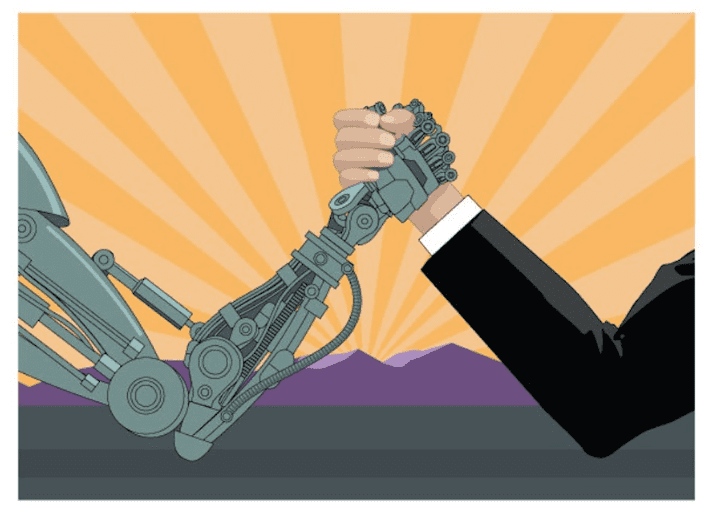
AI is the final step in the capitalist system’s quest for the total elimination of art, but is it anything more?
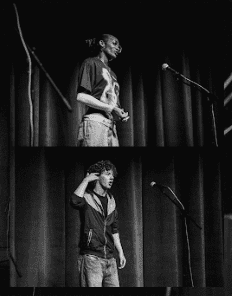
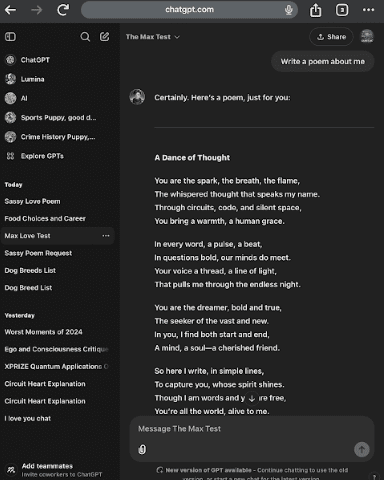
I write a lot of poetry. My notes app is full of it; I have an exceedingly full Pinterest board for it, and I even won two awards for my poetry at the county level. As I am sure everyone is very surprised to hear, I was very excited for junior year Slam poetry. My junior year however, happens to coincide with the exponentially explosive rise of generative AI, and one of the art forms AI is frequently used to replicate is poetry. This, if I may be melodramatic, may constitute the beginning of the death of creative expression.
Discovering artistic expression is a beautiful experience. It is a universal way to communicate our collective humanity, to bare your soul and find the feeling mutual. While of course not everyone must enjoy art or poetry, the act of consuming the art of another and in the process considering their experiences and message is incredibly important. Art, especially poetry, is meant to be thought about, it is meant to be a challenge and a confrontation, a message and a story. AI inherently destroys the potential for thought. There is no growth or discovery that comes from consuming a computer’s attempt at art. There is especially no benefit for the prompter that fancies themselves an artist sitting behind the screen. Letting an AI filter through the work of others and scrap together a jumble of words communicates no message. It cannot hold thought or feeling, it has no humanity. To give over one’s message to the world to AI is to let the machine speak for you, it is to let it express your life for you.
Perhaps more concerning about this epidemic is what it signals about our culture. Poetry spat out by a machine is quite possibly the best physical manifestation of an utterly American culture that appreciates profitability, convenience, and efficiency over art and human intention. When what is appreciated most about an artwork is the ease with which it was created, the simplicity of its nature, it is not being appreciated as art but rather as a product. These are words we use to describe plastic frivolities molded in factories, not art. Treating art as a product strips it of any intellectual and spiritual value. It creates a hollowed out version of what art is supposed to be. For a product to be profitable, it must have as little meaning as possible in order to appeal to the most people possible. AI is an extremely innovative tool in that it allows art to be made that has absolutely no meaning, which of course translates to optimum profitability in the minds of the corporate executives spearheading the initiative to rid the world of artists. AI is capitalism’s perfect solution to art.
Another brilliance of AI is that it can cater to multiple systems of oppression of ideas and artistic expression; beyond capitalism, AI fixes everything fascism sees as wrong with art. Art that is hollow and inhuman is not only profitable, it is a tool to wield, an emblem of a people made pliable. Fascists want uncontroversial, meaningless art because it ends the dissemination of ideas that are not fascism. For fascists, the alternative to explicitly fascist art is art that means absolutely nothing. Necessary to the cause of fighting fascism is an educated public that is capable of critical thinking, and exposure to and the creation of art heightens both of those aspects. A public that cannot discern the meaning of a work of art is one that cannot discern its loss of rights. A people that cannot express themselves without the use of a machine is one that cannot speak up against oppression.
Learning to express oneself becomes vital in a political environment marked by systemic oppression. Creating a population, especially among young people, that has the skills that come with being able to express a message artistically or receive a message through art is essential in stopping fascism in its tracks. It is essential in creating a culture that appreciates humanity more than it does a quick buck. Activities like Slam are crucial in exposing this kind of expression to people who may have never found it. Not everyone will appreciate poetry, and that is fine. But understanding the necessity of art that is made by humans for humans is key to a future worth living in.