

By Catherine Pope, Staff Writer
On November 9, 2026, Republican Congressman Thomas Massie introduced eight articles of impeachment against Secretary of Defense Pete Hegseth.
Thomas Massie originally proposed the impeachment of Hegseth on September 5, but was blocked in a vote of 211 to 204. His proposal then expired due to the House going into recess.

The original impeachment plan had only one article that focused on the War Power Resolution of 1973. This resolution was enacted to reassert Congressional authority over the ability to declare war.
Following the midterm elections, Massie reintroduced his plan to impeach Hegseth but with eight articles instead of just one. These new articles of impeachment pertain to specific events and orders Hegseth has made during his time as Secretary of Defense.
Articles I, II, and III refer to Hegseth’s unauthorized military hostility in Iran as a direct violation of the War Powers Resolution.
The first article alleges that Hegseth carried out unlawful and unapproved orders to initiate the war in Iran. It was explained that Hegseth acted with no declaration of war, statutory authorization, or imminent attack that would have warranted his actions in Iran.
The second claims that Hegseth continued military operations in Iran after both chambers of Congress had directed the removal of US forces. In June of 2026, Congress passed House Concurrent Resolution 86, which dictated the mandatory removal of all US combatants who were defending against imminent attacks.
The third article states that Hegseth prolonged the fighting and violence past the deadline to cease operations. The War Powers Resolution has a requirement that a conflict must end in sixty days, plus a thirty day withdrawal period, if it does not receive approval from Congress.
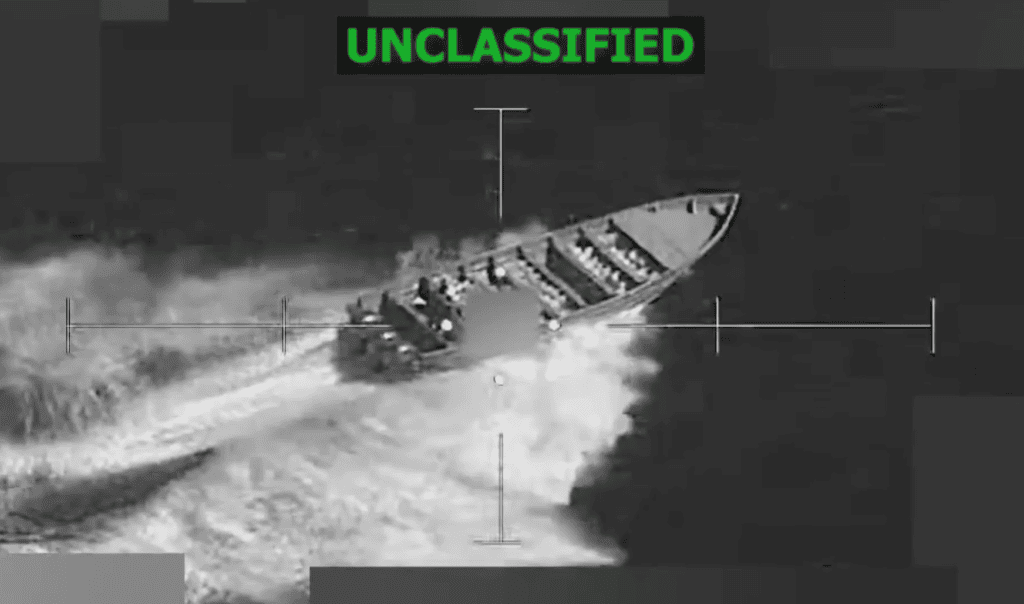
Articles IV and V discuss Hegseth conducting extrajudiciary killings and dismantling civilian protection safeguards in both the Iran war and counter-narcotic strikes (targeted military action intended to destroy drug trafficking assets) that killed over 200 people.
Article IV makes claims that Hegseth disregarded safety precautions meant to protect civilians from military operations. In this article, there is a discussion of deadly strikes carried out in Iran that injured and killed many innocent people, including an attack on an Iranian elementary school. Attacks against civilians are illegal under the agreement of the Geneva Convention, and it is considered a war crime to intentionally attack or harm any civilians in a conflict.
The fifth article accuses Hegseth of carrying out many unlawful lethal strikes against suspected drug trafficking boats in the Caribbean Sea and eastern Pacific Ocean. In these strikes, the US used drones to attack boats believed to be smuggling drugs across borders instead of using law enforcement, resulting in many reported deaths.
One of the major problems in these strikes is the use of a tactic some refer to as “double tapping.” This is a method where the military uses an initial attack that causes an explosion that destroys the boat, but upon seeing survivors in the water or holding on to wreckage, they fire another attack solely for the purpose of ensuring there is no one still living. The second strike is where the name “double tapping” comes from, and this attack, with the purpose of killing another person, is another breach of the Geneva Convention.

Articles VI and VII regard Hegseth suppressing free speech by retaliating against Senator Mark Kelly and illegally directing the capture of former Venezuelan president Nicolás Maduro.
The sixth article discusses the allegations that Pete Hegseth sought punishment for Senator Kelly who released a video informing service men and women that they are allowed to refuse illegal orders. This retribution would be an infringement of Kelly’s first amendment rights by not allowing his freedom to speak against Hegseth. Hegseth would also be stepping out of his jurisdiction as Secretary of Defense if he followed through on his wishes.
The seventh article refers to the capture of the former Venezuelan president. The article claims that Hegseth acted without any Congressional authorization. He directed US military forces to enter a sovereign nation to kidnap their internationally recognized leader. His actions of directing and executing this order was unlawful and frowned upon by many nations.
Article VIII pertains to Hegseth’s unwarranted military hostility in Yemen, which was in violation of the War Powers Resolution. The eighth article states Hegseth conducted a military campaign for the purpose of striking Houthi rebels in Yemen. It stated that the rebels did not pose any threat to the United States that would warrant military strikes against them.
Although this attempt to impeach Hegseth failed and Congressman Massie was not reelected to represent Kentucky, numerous Democrats have vowed to reintroduce the articles to impeach Hegseth in January when the newly elected Congressional officials will be inaugurated and may have the ability to change the vote in their favor.