

By Zander Hix, Staff Writer
Following massive gains in Congress, disputes over what vision should guide the Democratic Party threaten party unity.
After a historic victory in the 2026 midterm elections, flipping almost forty seats in the formerly Republican-controlled House of Representatives and a whopping eight seats in the Senate, the Democratic party is riding high as the clear favorites heading into the 2028 presidential election. With overwhelmingly Republican states—including Mississippi, which voted for Trump by 23 percentage points just four years earlier—electing Democrats statewide, many pundits are considering the results a rejection of the policies advanced by the Trump Administration.
Now controlling both chambers of Congress, the question is no longer simply what will the Democrats do to stop Trump, but how can Democrats advance their own agenda? Top strategists argue that with the party sitting at a net approval rating of -15 percentage points (according to the RealClearPolitics polling average), the answer is not what they’ve been doing.
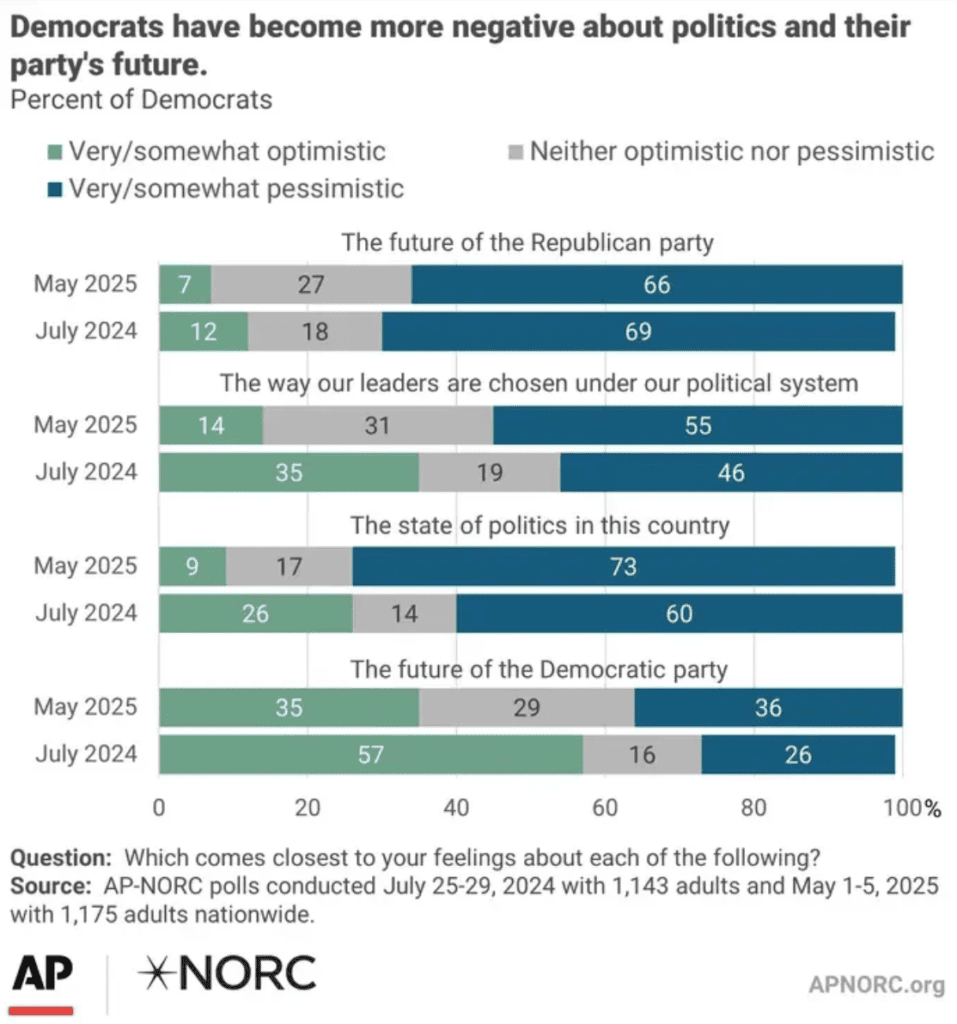
Progressive political strategist Krystal Ball proposes that the party did not win because of the vision of party leadership, but in spite of it. Arguing that low Democratic Party approval ratings show the American populace wants change, not necessarily establishment Democratic leadership, Ball advises elected Democrats to overhaul party leadership and utilize messaging strategies that accurately reflect the changing demands of the people.
Elected Democrats are beginning to agree. Following pressure from fellow Democrats— including Senator-elect Abdul El-Sayed—Maryland Senator Chris Van Hollen announced a bid for Senate Majority Leader, challenging Chuck Schumer, who has held the position for almost a decade. As a strong supporter of Israel and opponent of Medicare For All, Chuck Schumer is widely regarded as the epitome of the Democratic Party’s establishment, using his influence to advance a moderate agenda.
Pointing out Chuck Schumer’s unpopularity (approved by just 25% of the American public according to the RealClearPolitics polling average), Senator Chris Van Hollen proposes the Democratic Party adopts a more progressive vision that he says represents the Democratic Party’s base. Chris Van Hollen, known for his trip to El Salvador to check on Kilmar Abrego Garcia who was “mistakenly” deported by the Trump Administration, warns that if Democrats continue with current leadership, they run the risk of falling out of favor with the voting public and losing the party’s current Senate majority by advocating for policies out of touch with the American people.
A desire for change in leadership isn’t just visible in the Senate. A petition to urge Democratic congresspeople to vote against Hakeem Jeffries for the House Majority role has hit over one million signatures, backed by Hollywood star Mark Ruffalo. As the current House Minority leader, Hakeem Jeffries is in a similar position as Chuck Schumer.
Jefferies is viewed as the representative of the moderate wing of the party, and is also against progressive proposals such as Medicare For All and staunchly supportive of Israel. Figureheads such as Congresswoman-elect Angela Gonzales-Torres of the Democratic Socialists of America have committed against voting for Hakeem Jeffries, arguing that he would impede the formation of an agenda representing the demands of the Democratic Party’s progressive base.
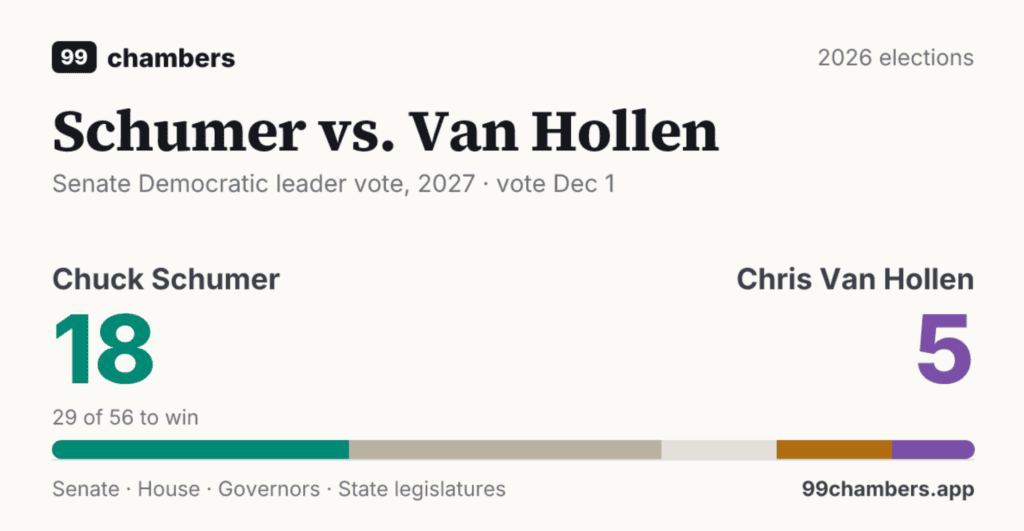
Although the situation is rapidly developing as votes are actively being whipped in both directions, the chances of a change in leadership appear slim. As of November 17 2026, just five senators have pledged their support for Chris Van Hollen to assume the title of Senate Majority leader, compared to sixteen for Chuck Schumer.
In the House of Representatives, the situation was looking even more grim for progressive hopefuls, as no candidate confirmed a bid for the Speakership title against Hakeem Jeffries before his official nomination. Many reluctant progressives, including Congresswoman Alexandria Ocasio-Cortez, argued that although she has apprehensions voting for Hakeem Jeffries as speaker, without a proper opposition, any votes against Jeffries are futile and only serve to damage intra-party relationships. Without that opposition, Jeffries secured the nomination for Speaker of the House.
Whether or not the challenges to party leadership succeed, a trend is clear: anti-establishment sentiment is increasingly reflected in the halls of Congress, and politicians viewed as part of the problem are being dismissed. Disillusionment with party leadership isn’t new to this election cycle, but rather is being amplified by elected officials looking to regain trust with voters. If another two years go by without legislative results from party leadership, the case to reelect figureheads like Chuck Schumer and Hakeem Jeffries only becomes increasingly difficult, and it may just be a matter of time before progressives finally emerge victorious.