
Written By: Emilia Gaines, Staff Writer
People tend to listen to gloomy or quiet music when they are sad, and upbeat music when they are in a good mood. For example, if you’re feeling down you might tend to play music that comforts the sad feeling, meanwhile when you’re happy you’ll play some songs that prolong and even boost your happy mood. The science behind why we tend to do this is actually quite interesting – so let me explain.
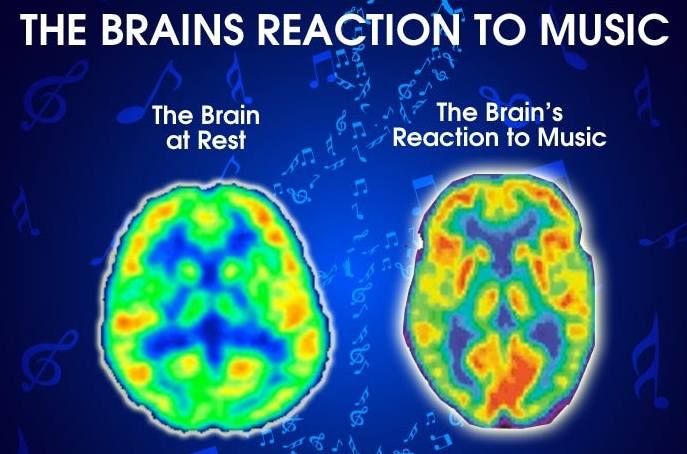
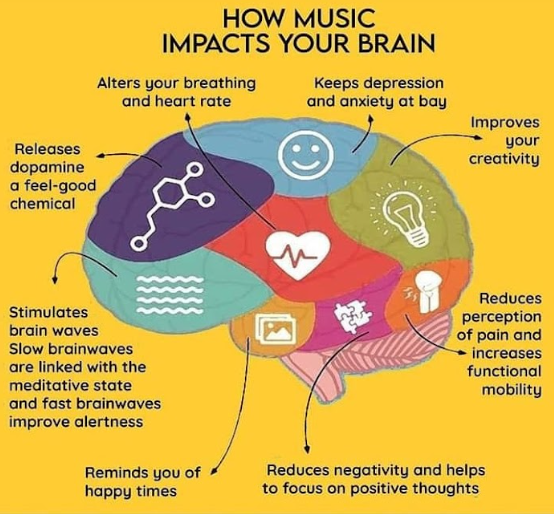
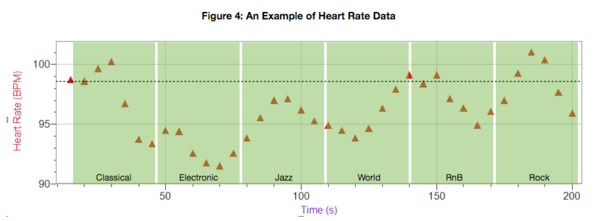
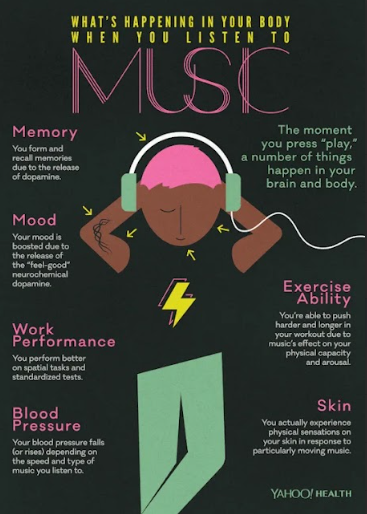
Listening to music can increase or lower your heart rate, trigger the brain to release dopamine, and can even evoke feelings that we have tied to personal experiences. Listening to certain songs can bring you back into a different headspace by bringing forth fond memories that you have tied to a song (consciously or unconsciously). Listening to music prompts the brain to release dopamine, a neurotransmitter that aids in regulating motivation, movement, pleasure, and mood. When dopamine levels increase, the brain signals that the action that triggered the release is beneficial, which makes you want to repeat that action; hence the reason we put a song on repeat.
Music can decrease our mood if we are in a better or more positive mental state before listening to it; which explains the melancholy feeling that rushes over us when we listen to a sad song. This is because when we listen to music we tend to revert back into the mental space where we first heard it, or into a situation which relates to the tune or lyrics of a song. So, if we hear music that we tend to listen to while we are sad, our brains revert back to a certain headspace that tends to connect with the music we are listening to, taking us back to that prior negative experience.
However, sad songs do not always create a melancholy environment while listening to it, music can also create a comforting or soothing atmosphere while you are feeling down. This is because with certain songs that we listen to, we feel deeply connected to it and understood, which is why we tend to listen to gloomy music while we are in a sorrowful mood. During challenging times such as breakups or family drama, we can catch ourselves listening to songs that relate to or remind us of specific experiences we have had involving those moments, providing us with a feeling of acknowledgement and validation. This validation is a very comforting thing throughout tough times, and the sad nature of the music can cause a strong release of negative emotions and serve as a coping mechanism which allows us to feel our emotions and work through it along with the music. You may be wondering how sad music can come off as comforting even though it does evoke some emotions we perceive as negative, but this is because our brain perceives the music as non-threatening, which makes it pleasurable instead of triggering the release of more gloomy emotions.

Along with boosting your mental state, music can also improve symptoms of physical pain. Now, this doesn’t mean that music can physically heal you, but it can distract your brain from certain pain signals so you can rest peacefully and pain free. These side effects transfer over to your mental state, improving anxiety, depression, and overall mood. This is why in some stressful situations, such as being at the doctors or preparing for something you may be stressed about, people will recommend listening to music to calm you down.