


By Emma Goad, Staff Writer
Become acquainted with The Philosopher’s Club president and read on the inspiration for the club and future plans for it.
In a world where critical thinking and meaningful discussions are more important than ever, a new club at Poly has emerged: The Philosopher’s Club. This exciting new group aims to bring students together to explore the fundamental questions of existence, morality, and knowledge, fostering a community of curious and open-minded individuals. Whether you’re a seasoned philosopher or just looking to challenge your perspectives, The Philosopher’s Club invites you to join the conversation and dive into the world of ideas. Here, you can meet the club’s founder to learn more about their vision and what members can expect.
This club’s president is Noah Montes (12) who was inspired to start this club after taking the ethics/philosophy class on campus. The course was the catalyst for his ever-growing passion for philosophy. He was already doing his own individual research due to the fact that he previously had “a budding interest in theology” alongside what he was learning in class, and he felt like he had so much new-found knowledge he wanted to share but no one to share it with. This motivated him to start The Philosopher’s Club in hopes of finding like-minded individuals and getting more people interested in philosophy.
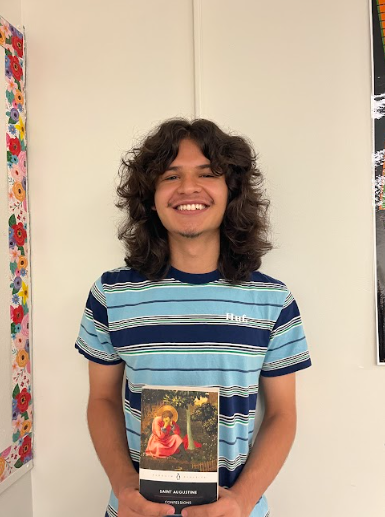
He has endless ideas for discussions up for debate in this club, from exploring the ethics of artificial intelligence to pondering the nature of reality. Here, club members will engage with complex ideas and test their own perspectives. By providing a supportive and intellectually stimulating environment, Noah hopes The Philosopher’s Club will inspire members to think deeply about the world and their place in it while developing valuable skills in argumentation, analysis, and problem solving. He is particularly excited about “debating people and trying to seek truth.”
Noah believes that now it is more important than ever to promote deep thinking and skepticism. He believes the stigma surrounding philosophy as a career needs to be changed and that becoming a philosopher should be a right extended to every member of society. He claims that “philosophy is human” and emphasizes his feeling that his greatest strength is “not only the ability to question others, but also [his] own beliefs.” He thinks that logical reasoning and discourse should always be prioritized over emotional reactions, and that one should always seek truth in every aspect of life. Through learning philosophy and having intellectual conversations with others, one is able to gain the necessary skills to formulate their own identity and beliefs. This in turn promotes a society that accepts individualism and rejects conformity.
As The Philosopher’s Club begins its first year, it is clear that this group is ready to become a hub for intellectual curiosity and analytical thinking on campus. By joining forces with like-minded students and exploring the big questions of life, members will not only deepen their understanding of the world but also develop valuable skills that will serve them well in all areas of life.