

Written by Isabelle Termath, Staff Writer
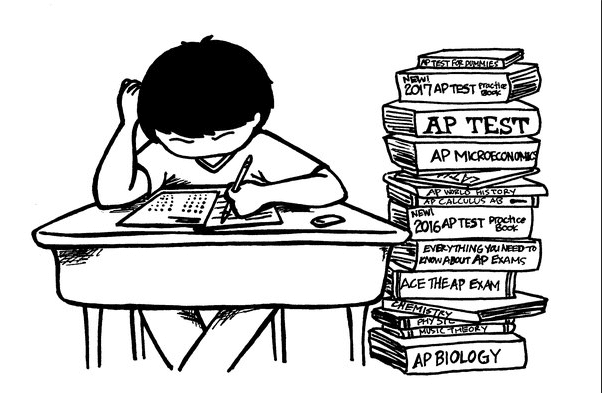
Read further for a breakdown of AP classes offered at Poly High School.
When it’s time to consider future classes you could take in high school, the thought of which APs, if any, you want to add to your schedule can be daunting. There are many different factors to consider: where your strengths and weaknesses lie academically, what your passion is, your career plans, etc. Here, you will find a summary and review of every AP class that is offered at Poly. Reviews for the majority of these courses are based on my own experiences. The six remaining classes I have not taken have been reviewed by a few of my fellow seniors. Please keep in mind that our experiences may differ from others, and are merely opinions-based. That said, let us get into each course.
AP European History
This was the first Advanced Placement course I took. It covers events that took place in Europe from the 1300s to the present day, and is highly rigorous. A primary focus of this class is writing. Come May, you must be able to proficiently write a DBQ (document-based question), an LEQ (long essay question), and three SAQs (short answer questions). There is a lot of content that is covered in this course, and it is best if you familiarize yourself with most all of it by the end. This is one class where your textbook is definitely your friend, and a subscription to Heimler’s History is very helpful. While it is a challenging course, I would 100% recommend it to anyone beginning their journey in AP classes. You get to know the rigor of these kinds of courses, you are exposed to the general structure of an AP exam, and it builds study habits that benefit you for the rest of your high school career, whether you take more AP classes or not.
AP Psychology
Roberto Gonzalez (12) took AP Psych his junior year and has only good things to say about it. He states it is not only “an easy A,” but adds that “it’s a core class out of the way for a career in the field.” If you are interested in pursuing a career in the world of psychology, this class will be a great foundation to start you on that path. In terms of the class, he states, “this course is heavily reliant on your knowledge of the terminology,” with frequent flashcard checks throughout the year. With an exam that “involves multiple units ranging from childhood developmental studies to adolescence and even phenomena that typically occur in the elder population,” he says this class and exam are definitely worth taking.

AP Art History
This course was one of my favorite AP classes I ever got to take. The class itself is incredibly easy, with light work and minimal stress. If you are missing a VAPA credit, this course counts towards that bracket. While there is a lot of content to get through, it is very easy to grasp and understand. As long as you keep up with terminology and your understanding of each art movement, tests will not be difficult. This was the easiest AP I took, and the one I enjoyed the most, with an end-of-year field trip to the Getty Museum.
AP Language and Composition
This is a class that is, while challenging, very enriching. Initially, the essays (Rhetorical Analysis, Argumentative, and Synthesis) are formidable and difficult to work through. However, as the year progresses, you will learn new techniques and skills to enhance your writing. The class itself, on the day to day, has a significantly greater workload than your standard English class. You dive further into topics that are analyzed in literature and discussed in Socratic Seminars. I would recommend this class to anyone, especially those fond of reading and writing, as it develops important skills that go beyond the classroom, such as debate, critical thinking, and reading comprehension. As for the exam, as long as you consistently practice multiple choice questions and familiarize yourself with the structure of each essay, you can easily pass it.
AP U.S. History
APUSH is very similar to AP Euro. Their exams are identical, down to each essay and number of MCQs. The only difference is their content, which can be surmised from the names. This is where taking AP Euro can be a great thing to have under your belt; you get to build upon skills you previously developed. I found that this class was much easier than Euro, both because of the content and because I feel that Euro made it seem less daunting since I knew how to write all the essays already. However, even if you go into this class without having taken Euro, it is still very manageable. I found this class to be one of the easier ones I took due to the fact that the content itself was not so dense, and can be learned steadily. Considering this is a General Ed, I would say it is very much worth it to take the exam. Just keep up with the material and study hard for the writing components, and that college credit will be yours.
AP Calculus AB/BC
I took Calc AB last year, and am taking the BC component this year. For starters, while it is possible to take, and be successful in, BC without taking AB beforehand, I strongly advise the average person to tackle AB first. Unless you are confident in your math abilities and study methods, enrolling in BC with no prior experience in a calculus class can be very taxing. Even as someone who did fairly well in AB, I still find myself struggling in certain areas of BC. Both these classes are very difficult. While workload may not be heavy, it is easy to find yourself behind in your understanding of certain concepts. This is not a class you can slack off in, and if you do, your grade will most certainly reflect that. As for the exam, studying, not cramming, is very important. Starting your review early, even before you are done with the course, is something I would advise you to do. This will not only increase your chances of success on the exam, but alleviate stress that may hinder your performance on this and other exams. This is a class where you must carefully consider how beneficial it would be to you. If you plan to pursue a career in math, this could quicken that process. If you gain college credit, you can be placed in higher math classes sooner. While I am glad that I enrolled in these classes, these two are ones I cannot recommend to everybody, as some may not find these fruitful to their own academic pursuits.
AP Chemistry
This was an incredibly hard, if not the hardest, course I took. It took many, many months of trial and error to find out what study methods best benefited me for this class. I can confidently say that skimming notes, halfheartedly listening to lectures, and procrastinating are things that will only set you up for failure for this course. Everyone will have their own experience with this course; I knew many of my friends that would ace every test, while some, like myself, would find it difficult to break 70% on each one. For the class grade itself, it is very easy to maintain an A or B. Mr. Schiller generously offers test corrections and quiz retakes. In addition to that, he offers recorded notes, test tutoring sessions, and a welcoming environment to any questions or help needed. While I still struggled with chemistry, I immensely enjoyed taking the class due to how engaging it was made by Mr. Schiller. For the exam, even if you struggle all year, it is still entirely possible to pass. Two months before the exam, I knew that with my current knowledge, I would likely not get the score I wanted. So I committed myself to studying almost every night, attending every mock exam Mr. Schiller offered, and improved my understanding of the course material in any way I could. I ended up passing with a 4. The moral of my story is that even if you find yourself falling short of what you imagined your ability to be in this, or any, class, you can still pass the exam. But also, do yourself a favor and keep that energy throughout the year. I would definitely recommend this course to anyone who feels comfortable and passionate about chemistry, and to those who do not, consider carefully.
AP Statistics
This year, I decided to take AP Statistics. It generally is an easier math class, although some units can be very challenging. However, the material is not intuitive, so you cannot afford to not study, or else tests, quizzes, and FRQs will be extremely difficult to get through. I found semester two to be less challenging than semester one, since the procedures you learn are all very similar to one another. There is also a large component of reading and writing. You must be able to interpret long word problems that deal with real world situations, and translate your own calculations into thought out sentences. The class has a heavy curve, so it is manageable to maintain an A or B. I have not taken the exam yet, so I cannot give my review there, but I will say AP Statistics is a great route to take if you want to take an AP math class that is not Calculus.
AP Literature and Composition
AP Lit is one of the easier Advanced Placement classes, especially after taking AP Lang. The books are easier to consume, and the essays are an easy rubric to follow (for the most part). While I enjoyed both Lang and Lit, I think anyone would enjoy Lit, even if they found Lang to be challenging for them. This is definitely a class I would recommend to most people.
AP Government
This class, along with AP Macroeconomics, is only a semester. The material is very easy to understand, there are simple concepts, and the hardest aspect is simply memorizing Supreme Court cases and foundational documents. This is a class that anyone can be successful in.
AP Macroeconomics
This class is not the hardest one out there, but I still have found it to be quite challenging at times. It is very concept-focused, while still requiring you to work through real world examples and situations. Studying is very important to make it through this class. It is challenging, but not impossible. I think as long as you keep up with your assignments, and study hard, this class will be very feasible to get an A in, and ultimately pass the exam.
AP Environmental Science
Senior Aubrey Cochran says that Environmental Science is a class she enjoyed taking and deems very much worth it. She says the course itself is, in the words of Mr. Jamberts, “basically what humans have done to harm the environment and learning what we can do to fix it.” She warns that while people may go into this class unsuspecting since it is deemed to be an easier AP, “it’s still a college level course and therefore challenging.” She states that as long as you keep up with your work and study vocabulary, it will not be super difficult. She says this class helped inform her on the environment, and she “still utilizes concepts from this class when thinking in [her] everyday life.”
AP Biology
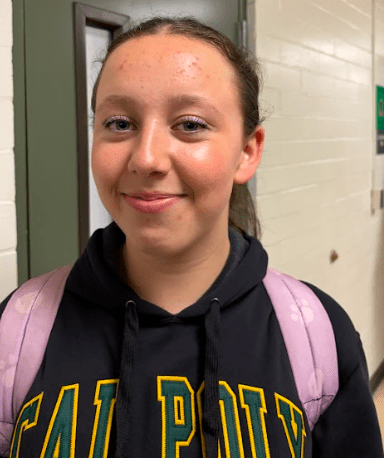
Caroline Dallarda (12) is currently taking AP Biology her senior year and reports it “is definitely a lot more difficult than other exams.” It is a high-intensive course that requires a significant amount of work to be put in in order to receive a passing grade, and procrastinating is absolutely not a choice. Each test is administered as if it is the AP test, and vocabulary is a crucial part of studying, with various different words that all seem to have the same meaning. On a positive note, she says Mr. Bagwell is an excellent teacher that makes the class both engaging and fun, while still simulating a college environment. This is a must take for those who plan to be science majors.
AP Spanish Language and Composition
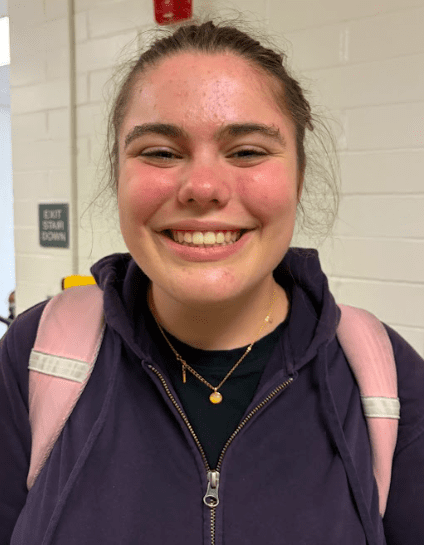
Andrea Arce (12) states that this course is useful not only for college credit but also for developing skills you can use on a daily basis. The concepts covered range from “how to write proper academic essays in Spanish to how to write an email in Spanish.” It provided her with opportunities to learn about different cultures from Spanish-speaking countries and learn about the many different customs. The class teaches you more about Spanish and how to utilize Spanish in your everyday life. She states this class will be easy to anyone who already speaks Spanish, but might be more challenging for those who do not, or are still learning.
AP Spanish Literature and Composition
Arce also took AP Spanish Lit, and describes it as being a much more difficult class. It covered many different literary works in Spanish, from plays to short stories. The translation aspect can be quite challenging, due to the fact that the language is older and harder to understand. She adds that if you do not know Spanish very well, it will make the already difficult readings harder. Ultimately, she says anyone who enjoys reading in Spanish should take this class, and recommends it for the material you learn and the chance at gaining college credit.

AP Physics
For our final AP class review, Arturo Hernandez (12) says Physics is one of the most difficult courses to take. The class is very content heavy, and requires you to teach yourself the majority of the material. He says it is worth taking to see what Physics one is all about, and would recommend it “for anyone who plans on majoring in STEM.” This is one of the hardest AP exams, so anyone who plans to take it should weigh their decision carefully.

Ultimately, whatever AP classes you choose to take are up to you, and how successful and beneficial they can be for you. The point is not simply to gain college credit. These classes build skills that will not only help you in school, but in the real world. You can also gain exposure to academic areas you are not familiar with, and can get to know what you are passionate about. Even if you take a class and find yourself struggling, falling short of your own expectations, or even not passing the final exam, you still have so much to gain and benefit from these classes. You only need to consider carefully which ones will bring you that benefit most.