


By Lyle Weems, Staff Writer
Constant threats of gun violence ravage our communities. How is it possible to foster any type of learning environment in these conditions?
Within one week two school shootings occurred in our nation. At Evergreen High School in Colorado, on September 10, 2025, a revolver was brought to school in the hands of a student. The saddening aftermath is that two students were injured, and are now in serious condition in the hospital. Then on the September 12, 2025, two more students were victims of gun violence in North Carolina, at a Southwest Edgecombe High School football game. In fact, throughout 2025 in America there have been 11 high school shootings with injuries or deaths, a total of 38 people injured, and 4 who lost their lives.
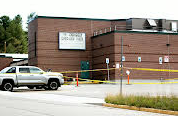
Police tape in front of Evergreen High School after the shooting (Photo by Kevin J. Beaty/Devenrite)
Let’s take it back further. In 2024 there were 39 high school shootings with injury or death, 38 in 2023, 51 in 2022, 35 in 2021, 10 in 2020, 24 in 2019, and another 24 in 2018. That leads to a staggering total of 232 tragedies by the name of school shootings since 2018. A clear pattern seems to take form from these numbers, the amount of school shootings per year in America is rising, and has been for many years. At this point in the United States, firearm related incidents are the leading cause of death for adolescents. Then consider how those numbers only account for times where lives were lost and injury occurred. Threats to schools involving firearms are extremely common across the nation, and in fact gun violence is a frequent focus of dark humor within the student body. But how can people seem unbothered by such a real threat?
Now that we have discussed national aspects of gun violence, let’s focus on Riverside Polytechnic High School and its student body. Student Michelle Feimer notes how “general awareness of gun violence has definitely increased” and how people are “starting to think about it more” as the topic is seen continuously in world and local news. She mentions how this concept appears “consistently” around her due to how often it occurs and how “wide the problem is”. This is true. Gun violence is present in most all aspects of life, and is the root of much of the suffering seen in the world today.

So how has the awareness of this topic spread to the point of appearances in casual conversation? Well the clear answer is through the media. News organizations, social media, podcasts, and general communication, all of which have been amplified by the technological age, allow for a wide variety of topics to be covered in quick media consumption format. People of all types are free to explore anything they choose, and face numerous opinions of the public. Now the 30 second videos have positive and negative effects. While it has created a much more aware and active generation of people, in this case specifically students, it also allows people to discredit the information they come across. When one is constantly faced with repetition and poorly explained information, as with media meant to grab the audience’s attention for a few seconds, people become desensitized to topics. This is the exact case with students and many adults. There is no real feeling of threat to most as gun violence and school shootings have unfortunately become a certain kind of norm in American society and education. This is how the students of today can joke so morbidly, and then move on with their day. Firearms appearing in their school seems to be such an unlikely story, but it has been proven to be anything but.

Common worries among students and parents about gun violence at school follow that it is very easy to access a school, this form of attack is common enough to happen to anybody, and that there is lack of change to decrease gun violence in schools. However, RUSD has taken steps to decrease the chance of violence at school through improving the school climate. Let’s address these one at a time. The District has moved to ensure that there is only one entry point for visitors on every campus, and that all entry ways are monitored by staff or closed and locked. Procedures to respond to an active shooter are set and practiced, escape routes memorized. RUSD has made progress to decrease violence on campuses through promoting Local Control and Accountability (LCAP) monitoring to better understand the student body. Then they implement more programs like Positive Behavior Supports, digital citizenship and anti-bullying training, deescalation training for supervisors, Restorative Practices, and more. While the legislature remains still, districts do what they can to keep their campuses safe and violence free.