

Written by Emelia Gaines, Staff Writer
AP Art History offers high school students a unique opportunity to explore global cultures through art, architecture, and historical context. This article dives deeper into what you need to expect from Poly’s own AP Art History course.
AP Art History typically covers art and architecture from prehistoric times to present day, and it offers a deeper explanation and analysis of artwork. It allows students to use visual and contextual analysis skills to understand what the art is saying through the various styles and symbols used. The class also covers topics from widespread cultures, not just eurocentric works, and gives insight on the political views and societal views of the time period that the art was created in.
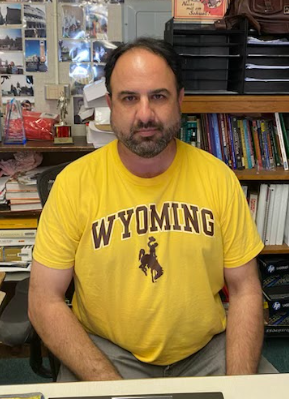
While interviewing Poly’s own AP Art History teacher, Mr. Zlaket explains the course along with his class on a deeper level. He explains that he felt as though he and his students from last year “had accomplished something together” and he wanted to have a chance to continue teaching those students in the next school year. He also wanted to “give them an opportunity to earn more college credit,” and he finds the class to be really interesting in general. Mr. Zlaket expresses that his favorite era to teach is the Baroque period, as every piece is “intricate and unique” and teaching it allows students to work on their analytical skills.
Art History is a beautiful subject which teaches students about how history has affected art over the years and how certain art pieces reflect societal events happening at the time of creation. While Mr. Zlaket does teach AP Art History, he also teaches other history classes such as Honors Word History and AP European History, which shows his passion for history. He cares about his students and hopes that they are able to gain specific skills and knowledge from his classes and wants them to remember his classes long after they graduate. He also discusses that along with analytical skills, his class offers students a chance to learn proper study habits and writing skills, and it allows them to “appreciate different cultures and different works of art.” By exposing his students to unfamiliar cultures, he hopes to enrich their lives and broaden their worldview. If you want to take this class, Mr. Zlaket advises to not purely base one’s analysis of a piece from only their perspective. He explains that everyone “has a natural reaction to art and people react to it because it is evocative,” but despite that one must rely on the context of the piece as well as their own impression.
Now what scares most people away from AP classes is the amount of work and the exam in May. However, this class is lighter than most other Advanced Placement courses. The test is three hours long which is a bit below the average length of most other exams. Having 80 questions to complete in one hour means that each individual one will not take very long to answer, and this section will fly by faster since paintings or sculptures will be given rather than a long paragraph of text to decipher. There are six free response questions which are all short essay prompts. Two hours are given for this section and only the second question does not provide an image. Although it is daunting, it is not as difficult as some other AP exams. The workload is also not atrocious. While it still is a considerable amount more than a regular class, it is not going to consume all of one’s free-time (unlike some other college courses). It is a class that will be challenging but not impossible, and Mr. Zlaket will be there to support, from August to May, all of his students.