

Written by Simran Kaur, Staff Writer
“Why are you so upset that your celebrity crush has a partner?” The question many have asked people on the internet for years, and the question that many on the internet get asked. Read about the underlying reason why such a simple question reflects issues online today.
From the beginnings of social media in the 2000s through to the advanced for-you pages crafted perfectly to catch our attention today, one thing that has always been constant is the window into the lives of the world’s top celebrities. But, how has this access shifted form into something entirely opposite? How have these seemingly innocent snippets of famous peoples’ lives turned into an outlet for fans to develop relationships with people they have never even met?
This unhealthy obsession with celebrities is called a parasocial relationship. This type of connection is when an individual invests their time with another individual (usually famous) online that they do not know that is completely one-sided.
With Twitter Stan culture having a renaissance online after the popular show Heated Rivalry took off during late 2025, there was a significant red flag in fan behavior, especially when fans realized that the show’s star, Hudson Williams, who played Shane Hollander in the TV series, was discovered to have a girlfriend. Fans immediately began to attack the actor’s partner with some individuals online picking her apart and accusing Williams of “queer-baiting,” which is when one suggests to be a part of the LGBTQ+ community to appeal to the community and gain an audience while not being a member of the community in actuality.

However, Williams never claimed to be a part of the LGBTQ+ community; he simply publicized that he was in a straight-appearing relationship and received extreme backlash for it. The problem here is the harassment fans carry out when their male celebrity crushes have partners; when the extreme love that these individuals have for a piece of media translates into their everyday lives, it warps these media figures from actually being real people that have lives, emotions, and relationships and reduces them to the characters they play on screen. This is extremely dangerous and unhealthy, as it develops patterns of obsession and is how parasocial relationships begin, which has been the cause of many celebrities to break up with their partners due to the extreme hate they face.
Extreme cases of parasocial relationships have been present consistently over the past twenty or so years, with one significant moment being the rise of the popular former boy band, One Direction. One Direction was a band that grew famous from its debut in 2010 and origins on the British talent show The X Factor, and its members being Harry Styles, Louis Tomlinson, Liam Payne, Nial Horan, and Zayn Malik, all of whom were teenagers at the time of their rise to fame. The band was of course popular for its music, but also drew in attention from fans from all over the world because of the boys’ looks.
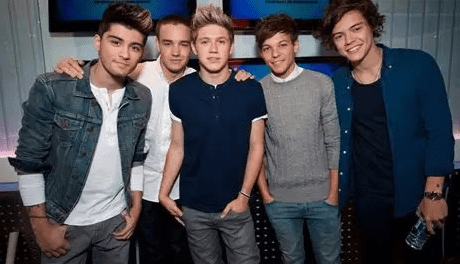
Due to this, there was a media push throughout the band’s five year run that those who came to their concerts had a chance to actually enter into a romantic relationship with one of the band members. This did help with their creation of a fan base, but also left effects on the impressionable young minds who were obsessed with the band members, so much so that when the band members would get into relationships fans would get upset to such an extent that they would send death threats to the young women that the members were dating. Many fans would even harass the members online, in person, and violate their privacy, disrupting their ability to do every day tasks in public.
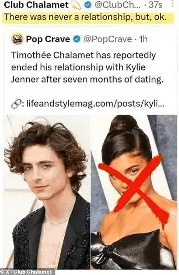
Now, this does not mean that “fan girl” culture is the root of all evil, it is actually quite the opposite. “Fan girls” have been the major reason why famous singers, actors, and media figures gain the attention and rise to the level of fame they do; their talent being praised and shared is how these individuals get famous. However, it is the fans that take it too far that we should be trying to stop and calling out their behavior.
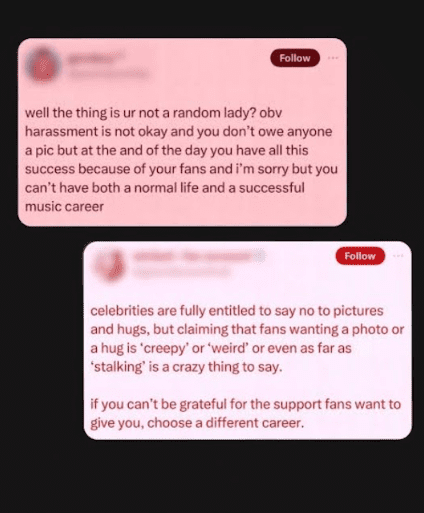
Screaming in a celebrity’s face, stalking them, trying to find out where they live, and crying and getting upset over them finding a partner is all not normal. As a fan who does not know this person, we do not know them and they do not know us, no matter how funny and charismatic they may be in interviews. It is important to keep this distinction in mind, as encouraging unhealthy online environments and violating these people’s boundaries is nothing but disrespectful.
These celebrities and figures do not owe individuals anything. It is nice if they wave and sign their autograph, but crying and arguing on the internet about it is breaking the lines between reality and the image fans have curated in their minds about these celebrities. Parasocial relationships become extremely hard not to develop for someone who is online twenty-four seven and is susceptible to the unhealthy patterns that behavior may cause, however, individuals can stop themselves from this by simply remembering that the celebrities seen online are not friends, they are people with emotions, feelings, and personal lives.