

Written by Zoey Jackson, Staff Writer
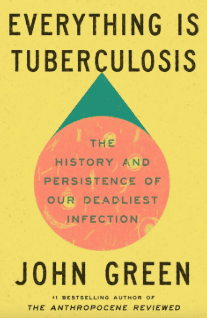
(Cover of “Everything is Tuberculosis”)
How a curable disease is currently the world’s single deadliest infectious disease.
When people think of tuberculosis, they may associate it with Victorian era diseases, such as cholera or scarlet fever, rather than one that continues to impact communities today. On March 18, 2025, John Green published his non-fiction book titled Everything is Tuberculosis.
His book explores the science, history, and the lasting impact tuberculosis has on society. Green’s striking title, Everything is Tuberculosis, invites readers to question how this disease is connected to the world around them.

The word ‘everything’ is all encompassing, suggesting that the disease’s influence reaches far beyond medicine. Green elaborates on the reason in an interview with the New York Times; expressing that his wife, Sarah, “often jokes that in [his] mind everything is about tuberculosis, and tuberculosis is about everything.” This quote suggests that tuberculosis is not just a medical issue, but rather a complicated disease intertwined into history and science.
In 2019, Green traveled with Partners in Health, a global health and social justice nonprofit, to Sierra Leone. At the Lakka Government Hospital, Green met Henry, a young boy who had been diagnosed with tuberculosis. The two quickly became friends, and Henry’s journey inspired Green to look into tuberculosis, which eventually led him to write Everything is tuberculosis.

Throughout Everything is Tuberculosis, Green dives into the societal inequalities that allow the disease to persist. Despite being curable, tuberculosis remains one of the world’s deadliest infectious diseases, claiming an estimated 1.23 million lives in a single year. Although it originally stemmed from bacteria that modern medicine can treat, Green argues that its continued abuse of communities stems from people. Tuberculosis disproportionately affects low-income communities, with crowded areas, compact living spaces, and limited access to healthcare. Throughout his book, Green reveals tuberculosis’s unexpected influence on aspects of everyday life, including architecture, fashion, and real estate.
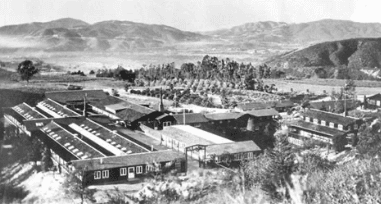
The iconic Stetson cowboy hat was created by John B. Stetson after his journey headed west to recover from tuberculosis. Similarly, Pasadena, California, was established in the late 19th century as a destination for patients of tuberculosis, as the dry climate was believed to improve respiratory health. These unexpected connections reinforce Green’s argument that tuberculosis has shaped far more than medical history, influencing aspects of society that often go unnoticed.
Rather than presenting tuberculosis solely through statistics and historical facts, Green uses personal storytelling to reveal the human lives behind the disease. When writing this book, his main message was to shed light on tuberculosis and why a significant amount of people are still physically effected by it.
His book is a call to action, that this disease is no longer something unpreventable, but something closer to political neglect. According to LitCharts, Green draws a comparison between tuberculosis and COVID-19, emphasizing how society often responds more urgently to diseases that affect wealthy and powerful populations. These comparisons highlight the economic and political favoritism the government has on those who are able.
At first glance, Everything Is Tuberculosis may seem like an exaggerated title, but Green’s exploration of history, society, and inequality reveals just how deeply the disease has shaped the world. John Green’s book challenges readers to look beyond the science of tuberculosis and recognize the human decisions that allow a curable disease to remain deadly.