


By Gabrio Miranda, Staff Writer
Grocery Psychology: Instead of treating the economy from the top-down, a duo of Nobel laureates created models that prove recessions and inflation are driven by everyday human choices, such as withholding funding out of fear of a medical emergency or layoff.
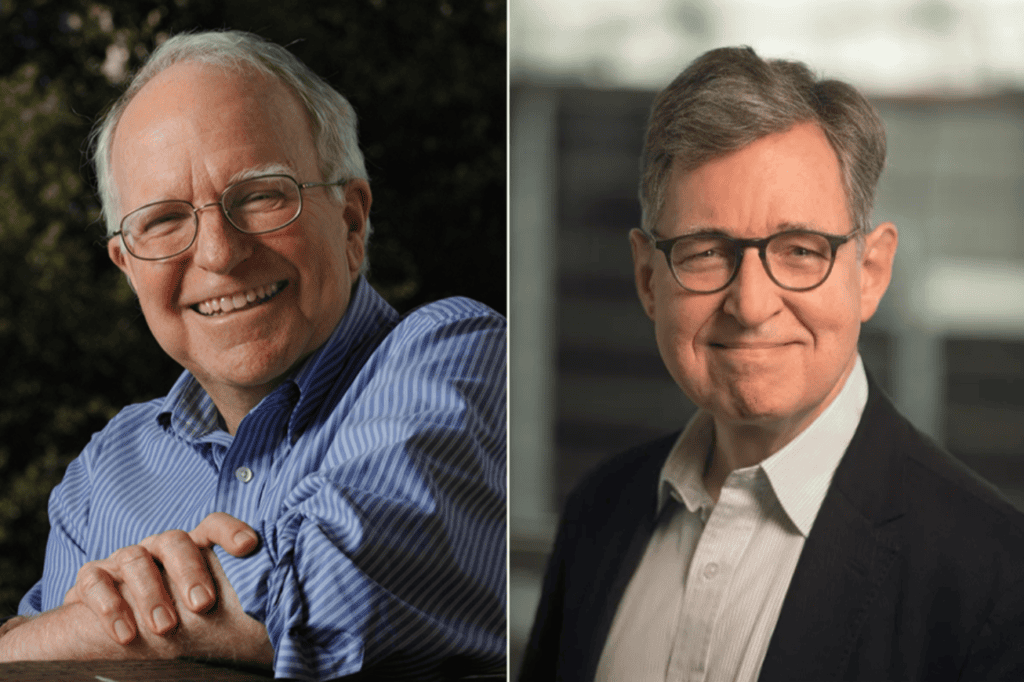
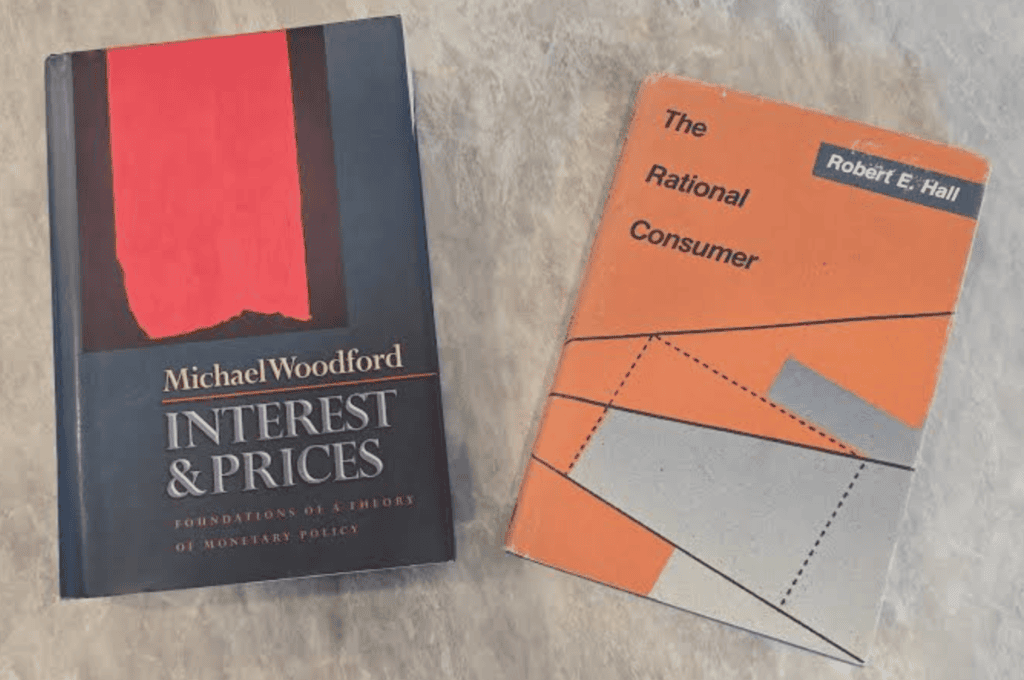
On October 12th, Robert E. Hall and Michael Woodford were the 2026 Economics Nobel Prize winners. Their research created a new interpretation over global bank management. Hall is a Stanford University professor who theorizes that daily spending habits are driven by long-term future expectations. Woodford is from Columbia University, an economist who created the mathematical foundation that proves business price changes are linked to international inflation and the general economy.
Before their discoveries, macroeconomics and microeconomics were separate fields of studies; macro operated from the top-down (e.g., studies the economy as a single entity), while micro ruled the bottom-up (e.g., multiple markets). Hall and Woodford’s school of thought proved that macroeconomics and microeconomics have a two-way relationship; combination of individual choices creates economic trends, and those trends force the environment to adapt.
Large-scale market trends are derived from individual decisions for the future; this unconventional approach led to a cohesive framework of how human interactions affects the economy in terms of inflation, employment, and even nominal GDP (e.g., total market value of all goods and services produced for a country).
Economists widely believe that household spending is reliant on current income; an increase in annual salary results in an increase for daily spending. Hall dismissed this notion by tearing down the crystal ball analogy: governments cannot manipulate consumer behavior with tax accommodations, as a short-term fix.
Hall insisted that no crystal balls exist in predictable data. His conclusion is that consumerism can shift due to a potential lay-off, winning a lottery, or even earning an inheritance; modern humans spend under the assumption of forward-thinking of our lifetime income.
In other words, the average person cannot predict tomorrow’s compromises, therefore one cannot predict tomorrow’s changes in spending habits; leaning less on the crystal ball analogy, Hall advocated to see the new way as a “random walk.”
Woodford’s Nobel prize-winning arguments target the behavior of global banks and businesses, not the consumer; often remarked as a “New Keynesian” (e.g., a macroeconomic theory that total spending of society is the primary source of an economy) mathematical blueprint. From the old-guard era, economists couldn’t explain the relationship between inflation and unemployment. Instead, Woodford proposed the “sticky prices” concept, the idea that companies dislike changing prices too often because it’s costly, time-consuming, and inefficient because of a slow-moving economy.
Woodford condensed his findings into a three-stage guide for central banks. A central bank has the means of steadying the economy via transparency with interest rates. Nowadays, even the U.S. The Federal Reserve implemented Woodford’s theories to set interest rates, and as a guide for how to interact with the public.
Hall and Woodford’s conceptual, economical theories exited the textbooks and were adopted by several of the most powerful banking institutions in the world: the Federal Reserve, the European Central Bank, and the Bank of England, operations designed to be a fallback during a crisis.
Both laureates shared one concept in common: markets move based on future expectations, which created an incentive for economic institutions to announce where the interest rate will be in months or years, granting consumers time in advance. When it comes to recessions, banks worldwide have a feasible plan to counterbalance the effects by severing predictable tax rebates; in other words, banks utilize Woodford’s advice to backstop the economy and change interest rates on the fly to reinstate currency confidence.
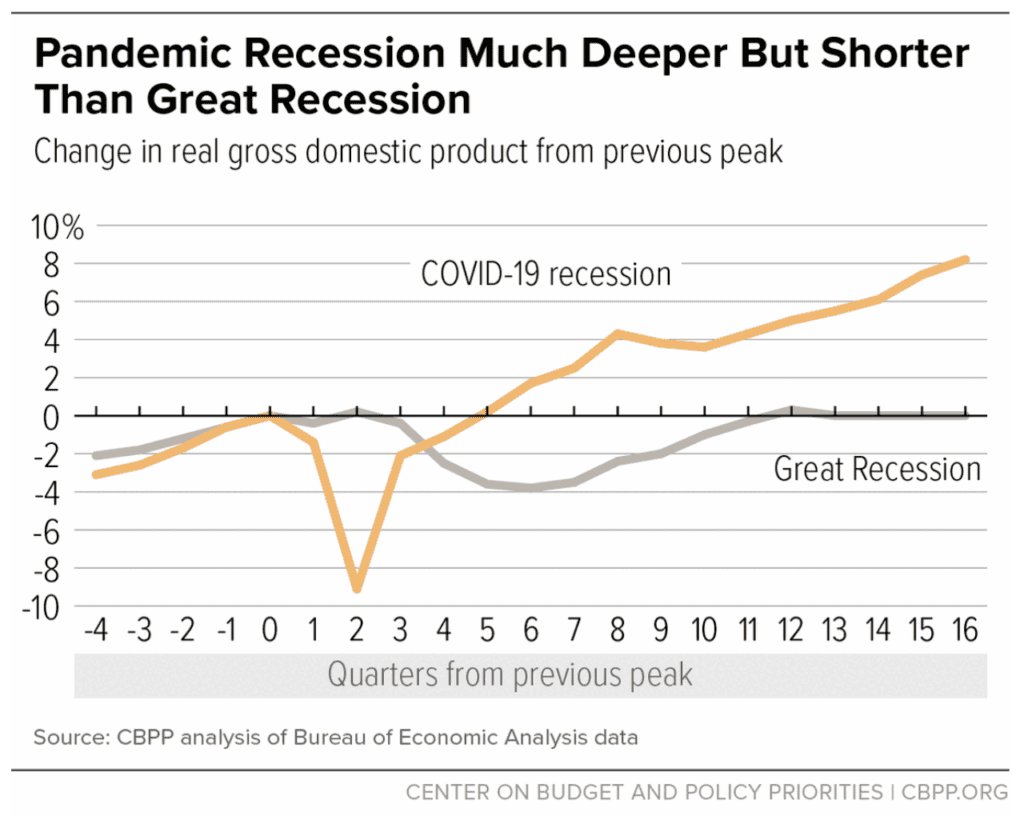
To appease any skeptics, an example would be of how these laureates’ advice affected real-world economic decisions would be the COVID-19 era. The world is shaped by a multitude of disruptions. While COVID-19 rampaged global supply chains, it was the people who paid the cost, as inflation affected everyone. As mentioned before, the “random walk” concept gave an option for banks to curb inflation; whenever spectators witness a tech company freeze their hiring pipeline (e.g., this phenomenon is referred to as a “headcount freeze”; this is a defensive countermeasure to protect profit margins by stop filling open roles), it’s a result of both of their work.