

Written by Lyra Stoyas, Staff Writer
The planet’s most isolated frontier, the Marianna Trench, has lost its status as the Earth’s most pristine sanctuary, as deep-sea currents continue to pull plastic to the bottom.
Seven miles below the ocean’s surface, where sunlight cannot reach, lies Earth’s most isolated frontier: the Challenger Deep.
What was once believed to be the one place humans could not reach has finally been contaminated by plastic waste.
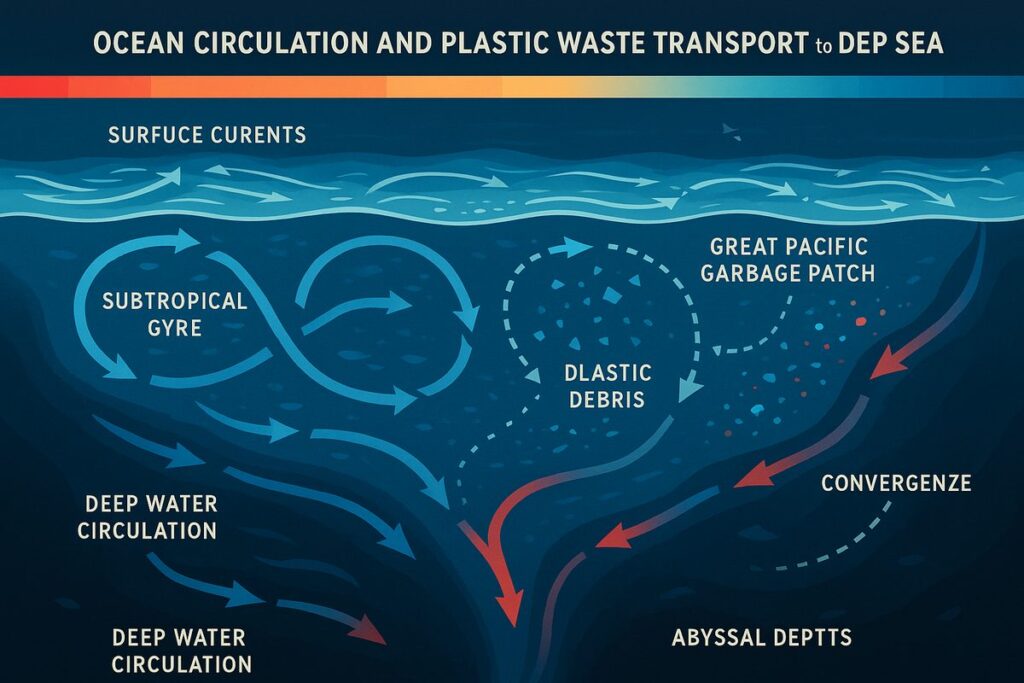
This contamination is driven by a cruel twist of oceanography known as the “trench trap.”As surface-level trash breaks down due to UV light, it’s simultaneously weighed down by marine bacteria, which causes it to slowly sink into the deep water currents.
These currents push debris down the steep V-shaped walls of the trench. This abyss acts as the ocean’s ultimate dead end because it creates a permanent “plastic smog” that hangs suspended in the water, ensuring that whatever falls to the bottom is trapped in a high-pressure and near-freezing environment forever.
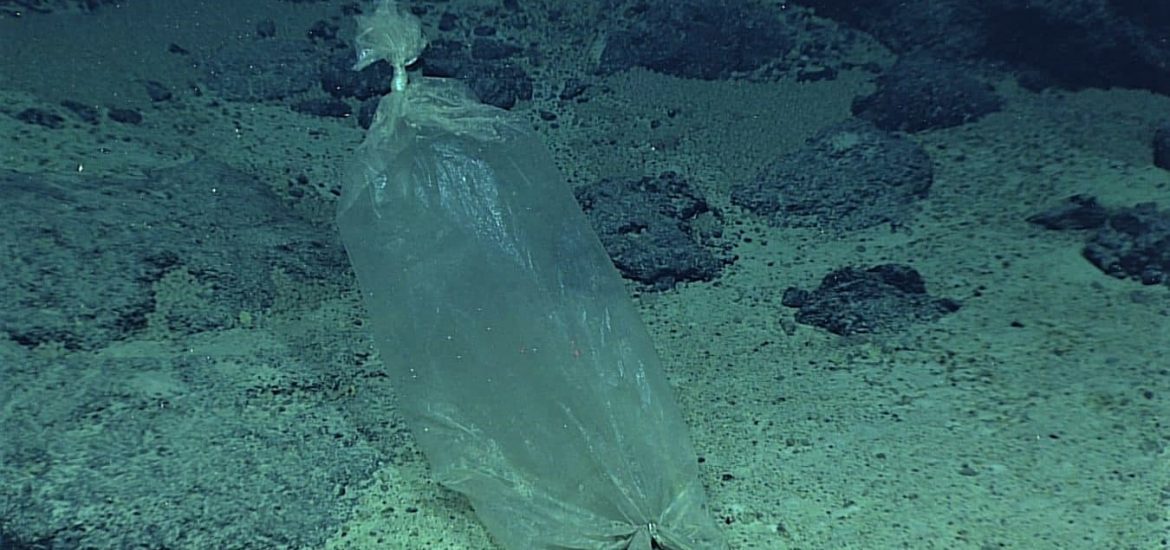
A striking example of this phenomenon was documented when submersibles captured images of an ordinary, single-use plastic grocery bag resting at the very bottom of the trench. While a human or a metal submarine would be instantly crushed by the immense pressure—which tops 16,000 pounds per square inch—the physics of a flat piece of plastic allow it to remain completely intact. Because it contains no pockets of air to collapse under the weight of the ocean, the bag sits perfectly preserved in the near-freezing water, destined to outlast the generations of humans who manufactured it.
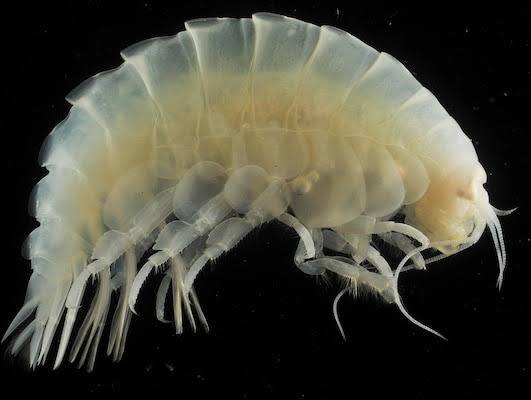
Far from a lifeless void, however, this extreme ecosystem is actually teeming with uniquely adapted life, from ghostly translucent snailfish to tiny, shrimp-like scavengers called amphipods. Yet, recent biological studies have revealed a devastating reality: the foundational creatures responsible for cleaning the trench floor are now consuming our waste. Tissue analyses of amphipods pulled from these hadal depths show that over 72%—and in some testing zones, nearly 100%—of these organisms have synthetic fibers like nylon and rayon clogging their digestive tracts. When these small scavengers mistake plastic for food, toxins bioaccumulate up the deep-sea food chain, poisoning a web of life we are only just beginning to understand.
This widespread ingestion is a direct result of how concentrated the pollution has become on the trench floor. When scientists analyzed core samples of pristine mud at the Earth’s deepest point, they found up to 2,000 microplastic particles per kilogram of sediment. To put that into perspective, the concentration of synthetic waste at the deepest point on our planet now mirrors, or even exceeds, the heavily polluted coastal waters found near major industrialized megacities. The trench has effectively ceased to be a wild habitat and has instead become the ocean’s ultimate garbage dump.
Human garbage seven miles beneath the sea serves as a stark metaphor for the modern world: no corner of the globe remains untouched by humanity’s footprint. Because staging a physical cleanup at these extreme depths is technologically and financially impossible, the crisis at the bottom of the world cannot be solved from a boat. International environmental organizations emphasize that the only way to save the deep ocean is to halt the crisis at its source—by aggressively cutting down single-use plastic production and tightening global waste networks before the trash ever has a chance to sink.