

Written by Noemi Martinez, Staff Writer
In these always changing times of high school, what are teachers’ thoughts on their students? What do they see that others do not?
The times are ever a-changing in high schools. It can be hard for students to look at teachers and imagine what they were like in high school, but teachers are in a constant state of reflection with new generations filling up classroom seats. They don’t have to imagine the differences, they’re met with them everyday. This brings about a question to the average student: what are these differences? Outside of the ever-changing flow of superficial trends, what fundamental pieces of high school life have changed? Let’s hear from Poly’s teachers themselves.

Mrs. Wilson, one of Poly’s literature teachers, is a jack of many trades. Not only does she teach Honors World Literature, she is Poly’s very own Philosophy and Ethics teacher, the leader of the Ethics Bowl Club, and aid for the Philosophy Club. From seeing students challenge their academic abilities in their writing to moderating philosophical debates, Wilson is constantly exposed to the ever-evolving student body. Let’s see how it’s evolved since their education.
One of the most notable changes she highlighted is the social life of students. “I don’t see as much ability for kids to socialize” and one of the largest culprits for this change is technology (Wilson). Phones have created an additional pathway for students to hide from socialization in their classes. While they may have been able to hide from peers before, technology has created an additional way for students to withdraw socially. There’s also less outside interaction with friends. She notes that when she was in high school, there were slumber parties and outside adventures, but kids just aren’t experiencing the same level of enrichment. “Texts are such an ephemeral thing” and it’s hard to make deep, flourishing connections behind screens.
Additionally, there’s less subcultures present. While cliques can be negative, she highlights that there’s generally less “strong group identity,” with students being less bubbled and lacking niche cultures that make them ‘them’. She also notes stronger school spirit compared to her experience during high school, especially with students being involved in clubs. “Kids were a lot more rebellious. . . maybe that was because they had their own community,” she notes, potentially identifying stronger school spirit being a result of less group identity. Students’ desires to reach out are being mollified by their involvement in school activity.
Generally, she highlights that there haven’t been too many notable changes. Despite some key differences, the whole of Poly’s student culture is “the same stuff, different flavor, but still ice cream.”

Next up, Mrs. Schrock. As a lover of science, she holds the titles of Poly’s beloved Honors Chemistry, Anatomy and Physiology, and Avid’s teacher. After years of challenging students’ scientific skills and academic determination, she gathered to share her perspective on a few generational differences between her high school experience and the current student body’s.
One of the most notable changes Schrock has seen is in self reliance and responsibility. Students have always had to self-manage as they grow into themselves, but there are less “individual pursuits” compared to her high school experience (Schrock). Students no longer have to rely heavily on limited resources to provide themselves, such as forming communication skills and reaching out to adult figures. “Today, your resources are just so available,” she notes, and some of the students she sees “take it for granted.” This results in less self direction with students advancing their knowledge, with tools like the internet making it more difficult for lessons to solidify into memory. She argues that there’s been an increase in “apathy” regarding personal pursuit, and students give less care to know and understand important concepts.
While modern technological advancements may have made it harder for students to learn important lessons, there are also positive changes to learning that come with time. “There’s more emotional/social connection with teachers” she observes. Compared to before, students are generally more comfortable engaging with their teachers. Schrock highlights that having more positivity in the classroom is “associated with better learning,” and makes it easier for students to connect. There are many small changes, such as less emphasis on reading comprehension skills compared to the past, but generally, she emphasizes that there are “some positives and negatives” to all changes.
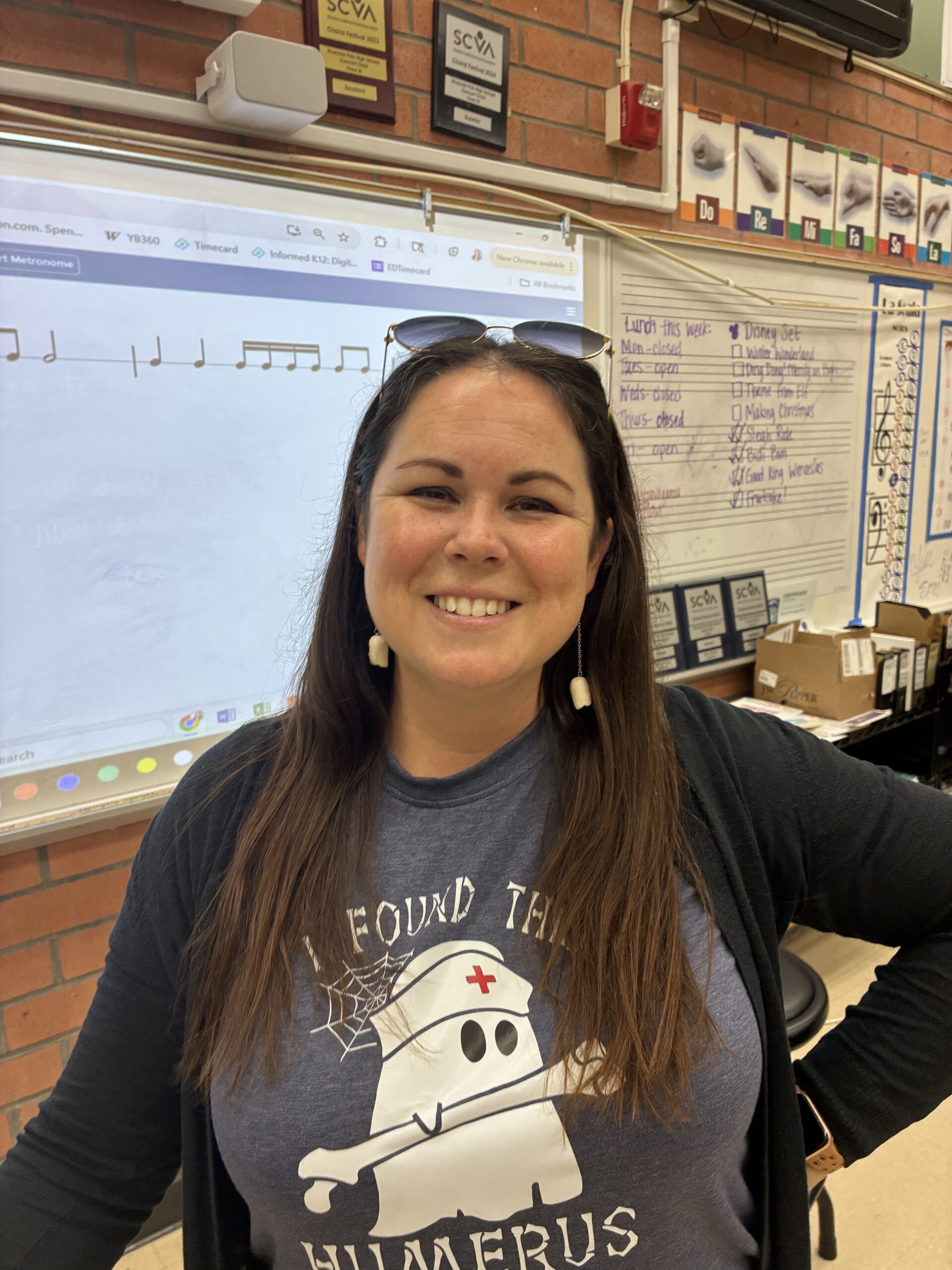
There are few teachers on campus who get to see students from all grades and ages in the ways that Ms. Walton does. A lover of music, she is Poly’s singular choir teacher. From teaching the exceptional varsity choirs Bella Voce and Chamber Singers and the talent Show and Concert Choirs, she connects with an extensive variety of students daily.
In Walton’s teenage years, she notes that she didn’t have “24 hour access to [her] friends” (Walton). The value of interactions were limited to the time in which connection was possible, and technology was not always capable of bridging the gap created by physical space. The communication style now is so vastly different, with kids not having to worry about minutes and texting limits to anywhere near the same extent. She remarks that despite a few benefits, this change is largely negative. “Face to face connection. . . is so important for developing socially” she explains.
Additionally, she’s noticed changes in individual work ethic and consequences. “The sense of apathy, that has always existed, reaches a far greater demographic now,” she observes, noting that even individual resilience has changed in academics. Part of this, she attributes to the social and academic differences caused by the pandemic, and the notable shift it had in traditional student behavior. This change also extends to the consequences of apathy. She describes how often grace is given to academically apathetic students, for better or worse. “Some people need grace that wouldn’t normally have gotten it 15-20 years ago,” Walton remarks, “but I also think we aren’t necessarily teaching people that there are consequences when you follow through on things.”
To go even deeper, Walton’s noticed a subtle anxiety brimming in students. When she was in high school “people were clamoring for independence, everybody got their license at 16,” she notes, with many students not crossing that bridge until post-graduation. She acknowledges the economic struggles attributing to this plight, but there’s more beyond the surface. When asked what the cause could be for the lack of motivation, she acknowledged an “anxiety about growing up” that she sees in many of her students.
Finally, the remarkable Mr. Lovett. Or, as known by his students, Chef. Chef Lovett is the teacher of one of the most sought out electives and CTE oriented classes, culinary. From intermediate, advanced, and culinary cafe, he interacts with many students motivated by the culinary arts. Through career-oriented and hands-on cooking lessons in class, Lovett has experienced the many different flavors of learning and behavioral differences in students.

“When I went to high school, we worked a lot out of textbooks” he remarks, noticing that many students nowadays don’t even carry one in their backpack. The change “can be more efficient”, but the multitude of distractions can take away from the positive changes in learning. When contemplating change in work ethic, he notes that, generally, “students are smarter than they were when I was in high school,” because of the advances in technology and the subsequent exposure. “The world was a lot smaller,” he reflects, “[technology] has increased students’ awareness of the world.”
It’s hard to remember that all teachers were once students, especially high school students. At such an important stage in life, where everything is changing, picturing fully formed adults in immature teenage minds feels odd. But everyday that they see you, they are looking at a different version of their youth. If there’s anything one thing to conclude from the different perspectives, it’s this; things change, but kids will always be kids.