

By Gabrio Miranda and Tristan McCandless, Staff Writers
“I’ll show you deadweight!” – Nero, underdog’s dilemma in an action-paced adventure.
The game presents the audience with the legendary devil hunter, Nero, a partner of his uncle’s mercenary business who was a past protagonist of earlier Devil May Cry games. Their objective? Defeating the main villain, “Urizen,” the nefarious usurper; Urizen’s presence inadvertently exposed Nero’s internal weakness: an inferiority complex of not being strong enough.
A turn off for some viewers is that the Devil May Cry franchise is categorized as M, for Mature 17+, by the ESRB and there is no option to tone down the graphics. That being said, Devil May Cry is unofficially noted as part of the “hack and slash” genre, due to its heavy emphasis on swords and guns.
It should also be noted that the entire Devil May Cry series, not just V, is notorious for exaggeration and unnecessary flair. As a matter of fact, that’s the entire identity of this series, whether it would be moonwalking in the most serious of situations or taunting the enemy.
For the fifth iteration, V, specifically, the animations for certain weapon archetypes were superb in their own right; the game classifies them as “devil arms/breakers.” However, the exception to the “devil arms/breakers” rule would be Nero’s signature weapon “Red Queen,” which is canonically a human-made and blunt-edge sword.
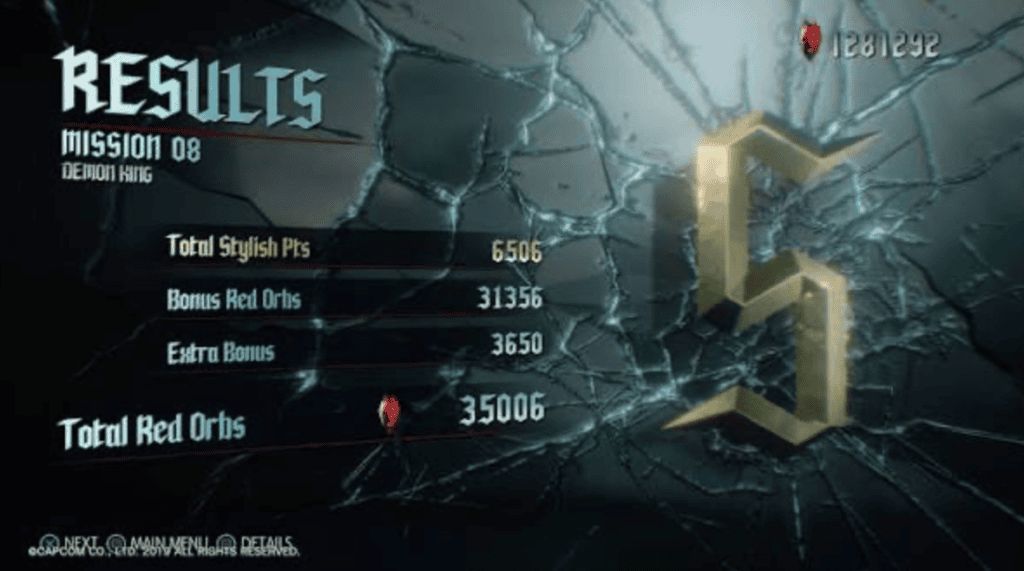
Combat in this game is shown to be intensive, which can be applauded by its use of “ludomusicology”, or the study of video game music. Devil May Cry V adopted “battle themes” for each of its characters: “Devil Trigger” for Nero, “Crimson Cloud” for V (yes that’s one of the three characters’ names), “Subhuman” for Dante, and “Bury the Light” for Vergil.
As for the expanded cast, a non-spoiler introduction of the main cast, includes V, a mysterious, frail, and poetry-quoting client who hires Dante to stop a world-ending demonic threat. There is also Dante, a legendary, red-coat devil hunter who specializes in paranormal cases; in game, his suspicions grew in regards to V, whom he suspected was secretly Vergil, his older brother who went missing decades ago.
The main villain of the story is a direct reference to William Blake’s works, referred to as “Urizen”, a personification of conventional reason, law, dogmatic religion, and oppressive restriction.
Devil May Cry V leans heavily on William Blake references, where V often quotes passages from “Auguries of Innocence,” and the duality of “your reason” to represent Dante’s primary motivation and rival.
Gameplay-wise, progression is steady and entertaining. The main cast, Dante, Nero, and V have what is referred to as “DT-gauges”; these are transformation gimmicks rewarded to the player for landing their hits, granting access to increased damage or entirely new movesets that are unlocked via red orbs.
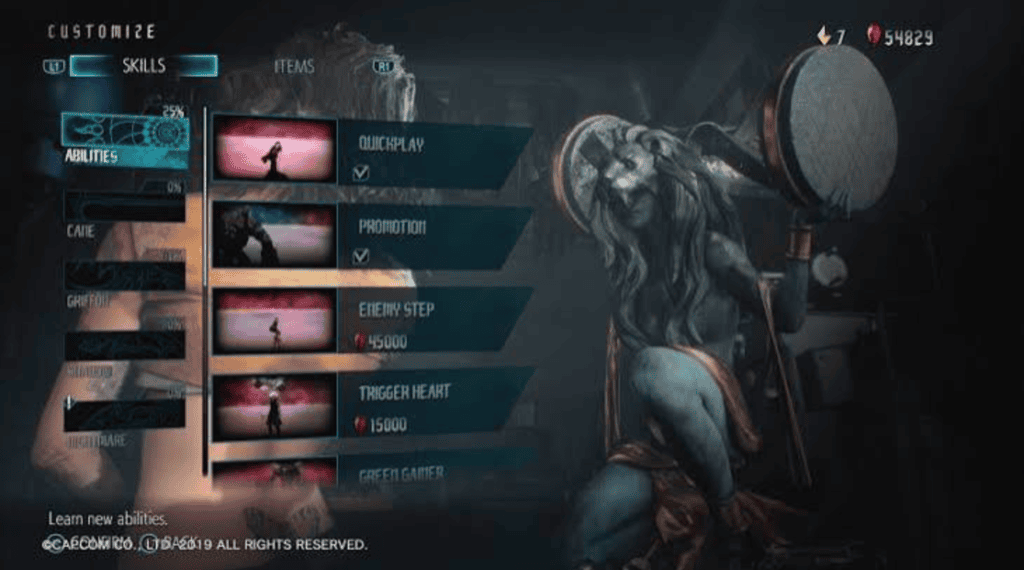
While its combat mechanics can be praised, one criticism that has been brought to attention is the redundant, open-environment exploration. Many fights end abruptly before the music escalates, leaving dissatisfaction. Although the player can solve this issue by playing the higher difficulties, only one category fits with the power fantasy the most: the Hell and Hell mode.
One of the glaring problems that Devil May Cry V has is its progression. Now, this is dependent on preference, for example, whether the player likes puzzles or not. The game features a generic “door and key’ mechanic; the “key” is a “nidhogg hatchling” used to open seals. Critics claim that this is incredibly “monotonous” for the player, and it’s considered bad game design due to how abruptly many fights end without satisfaction.
Regardless of preference, Devil May Cry V is worth a try; its combo-system can be difficult at first, but it’s worth learning. From the beginning, the player will face a being of finite yet immense power that they are designed to lose against for story progression, but it is rewarding to challenge oneself to unlock the alternative ending.