

Written by Ella Fortine, Staff Writer
If the U.S. has not explicitly declared war in decades, then what does the word mean today?
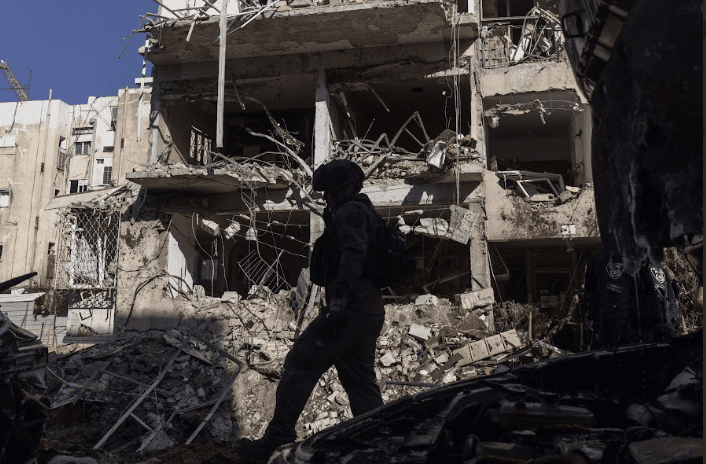
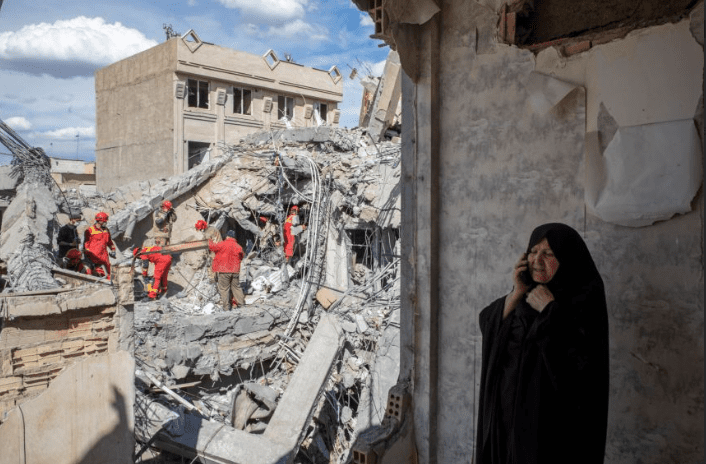
The Iran War began on February 28, 2026, with the killing of Ayatollah Ali Khamenei. The war has lasted over a month, leading to the deaths of at least 1,937 Iranians, including children. United States and Israeli strikes on the country have numbered in the thousands, leading to carcinogens and oil pollution in the air along with the thousands of casualties. And yet, there has been no declaration of war. According to the framework set in the Constitution, the only branch of the government with the power to declare war is Congress, and that branch had no involvement with the “major combat operations” occurring now in Iran. The United States is not at war. In fact, the United States has not been at war since 1945.
Despite past conflicts, such as those in Korea, Vietnam, and Iraq, existing in the public consciousness as “wars”, the most recent time the U.S. was engaged in a conflict that had been deemed “war” by Congress was in World War II, when it declared war on Japan, Germany, and Italy in December of 1941 after the bombing of Pearl Harbor. The Korean War that followed soon after was not a war but instead considered an “armed conflict”. Same with the Vietnam War. “Armed conflict” becomes a tidy euphemism for military actions that cause as much damage and death as a congressionally approved war; it is a euphemism that becomes especially useful in avoiding checks to executive power. Structuring the system so that the executive branch of the government has general control of the military but requires consent from the legislative branch to go to war was done with the intent of maintaining the democratic checks and balances so dear to our founders’ hearts. However, many presidents since the birth of the nation have found and created loopholes, one of such being the War Powers Resolution of 1973.
Intended to check executive military power after the Korean and Vietnam Wars, the War Powers Resolution outlines the conditions for U.S. military action, that the President must notify Congress within 48 hours and the military action cannot go on for longer than 60 days. However, the justifications for military involvement required to be reported by the resolution can offer presidents the ability to create rationale for military action that would otherwise be disapproved of by Congress. This is what allowed conflicts like the Iraq War to be classified as “self defense”, and what is allowing the current Iran War to be classified as such as well. The war powers report states the U.S. struck Iran “in collective self-defense of our regional allies, including Israel,” only the latest in a long tradition of military action under the pretense of necessary defense.
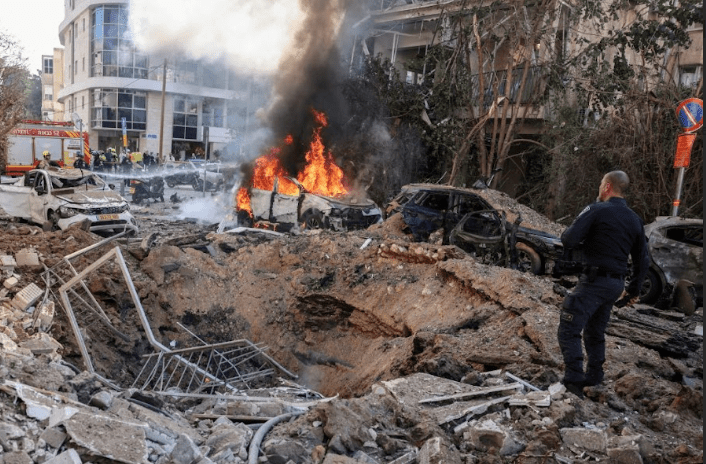
What this strike represents in actuality is not an act of self defense, but an executive overreach of power. The War Powers Resolution was passed as a method for the president to use the military in the interest of national security while still maintaining a functional system of checks and balances. Those checks and balances do not exist when the nation becomes thrown into a war that in one month has disrupted the entire global oil economy and wreaked destruction throughout an already unstable region solely for the purpose of a regime change directed by our most beloved ally, the apartheid, genocidal state of Israel. No, we have not gone to war since 1942, but when war has so strict a definition such that no conflict has approached it except in name for 80 years the power intended to be reserved solely for the legislative body becomes meaningless. War becomes the whim of the executive branch, which is currently headed by a man who has been proven to act dangerously and erratically without regard for the good of the people.
Even with such a president, the Iran War is not a new form of overreach. It is not an innovative abuse of power. It is the result of a government structured towards violence and greed for power. The reason this “war” is possible is an issue that runs far deeper than the Trump administration, and will continue past unless the militant focus of the government is fundamentally changed.