

Written by Gabrio Miranda, Staff Writers
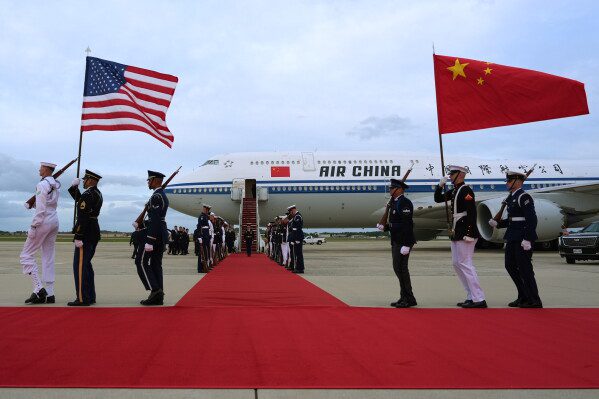
Rolling the red carpets with promises of international stability, President Donald Trump and Xi Jinping ended this year’s White House summit on a high note—but offered nothing for any future-proof resolutions.
While not a traditional, conventional war, China and the United States have entered an unacknowledged, modern economic conflict—with 2018 U.S. tariffs igniting the fuse. Prior to 2018, friction in the global economy between both superpowers has occurred—but not to the extent of a retaliatory trade war.
As of late, Washington has committed to restricting Beijing’s access to high-end microchips, while increasing military support for Taiwan. As of 2026, both world leaders held a rare discussion in the White House.
The topics discussed for this year’s White House summit in late September ranged from: temporary trade truces/agreements, to A.I. regulation, continuous maritime disputes over Taiwan, and geopolitical hazards of the American-Iran conflict that stagnated China’s $400 billion in long-term investments for Iranian oil.
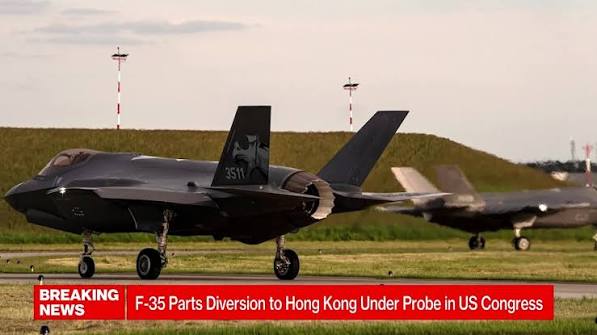
While the White House summit emphasized guardrails for the future of A.I., president Trump treated Beijing as a guest at the dinner table. The same can’t be said with Chinese authorities when it came to the interception of proprietary stealth components (e.g., cockpit canopies & weapons-bay doors) from the F-35.
Currently, president Trump celebrates short-term diplomatic victories, yet Beijing holds a knife behind their back, while humoring the media with compliance.
For Taiwan in particular, Trump has frozen a $14 billion arms package shortly after his 2026 visit to Beijing in May, as a response to Xi’s grievances over the recognition of Taiwan.
President Trump has legally suspended the Taiwan Relations Act, which was a historical mandate that gave Taiwan a means of defense. As of today, the FMF (Foreign Military Funding) package for Taiwan remains frozen, invoking a negative, bipartisan response.
Analysts from the Brookings Institution believed Trump’s actions made Taiwan more vulnerable than ever. They scrutinized the maneuver as short-sighted, as he’s using the small nation as a bargaining chip to appease Beijing’s leadership for economic prosperity.
The treatment of Taiwan by Washington created friction with the likes of Japan and South Korea who now fear that U.S. security isn’t guaranteed if it can be bought for the right price. Alternatively, Japanese officials expressed alienation over Trump’s projection of an “old alliance,” as he reminded Xi of their Chinese/American ally-status during WWII against old, Imperial Japan of the Axis.
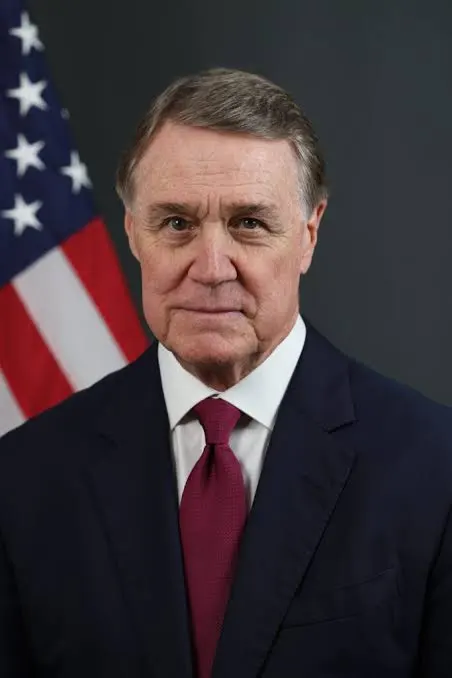
Domestically, the argument shifted into questioning Trump’s alignment, which was shoved to all corners of Washington because the U.S. Ambassador David Perdue unleashed a political firestorm by claiming Trump has allegedly stated: “Hey, we sell arms to other people around the world… would you like to buy some at one point?”
As much as people want to believe what they’ve heard in the White House during late September, this will not undo the underlying issue for years of conflicting foreign policy between both superpowers.
The A.I. debate is polarized between two camps; Trump views A.I. as a means of economic competition, while Xi values it as validation for China’s ideological security; both sides will continue the development of autonomous weapons.
Talks of A.I. were limited to mutual agreements of emergency communications to prevent any future misunderstandings; no-one agreed on banning A.I. lethality, and it shouldn’t be a surprise. While both nations have competed in a race of A.I. integration into their command structures, the summit was still praised domestically for deescalating automated misinterpretations; all it takes is one unaligned A.I. glitch, or any hallucinating software to unleash an unvetted military counter response without a human in the loop.
The positive: an immediate outcome from this White House summit was a fleeting, two-month extension of the U.S.-China trade truce, and it was designed to buy more time for the untangling of long-term disputes. Moreover, Trump and Xi agreed to a bilateral agreement on tariff reductions of $30 billion worth of non-sensitive exports/imports that is free from ITAR laws, which is a federal mandate over “dual-use” technologies.
Unfortunately, the trade agreements are still tied together in shoe strings; our secretary of the treasury, Scott Bessent, noted that China hasn’t fully admitted to their pledge of the $17 billion agricultural goods purchase. Equally important, many tech companies and the military industrial complex remain infuriated by China still refusing to lift export restrictions on rare earth metals.