
Written by Lyra Stoyas, Staff Writer
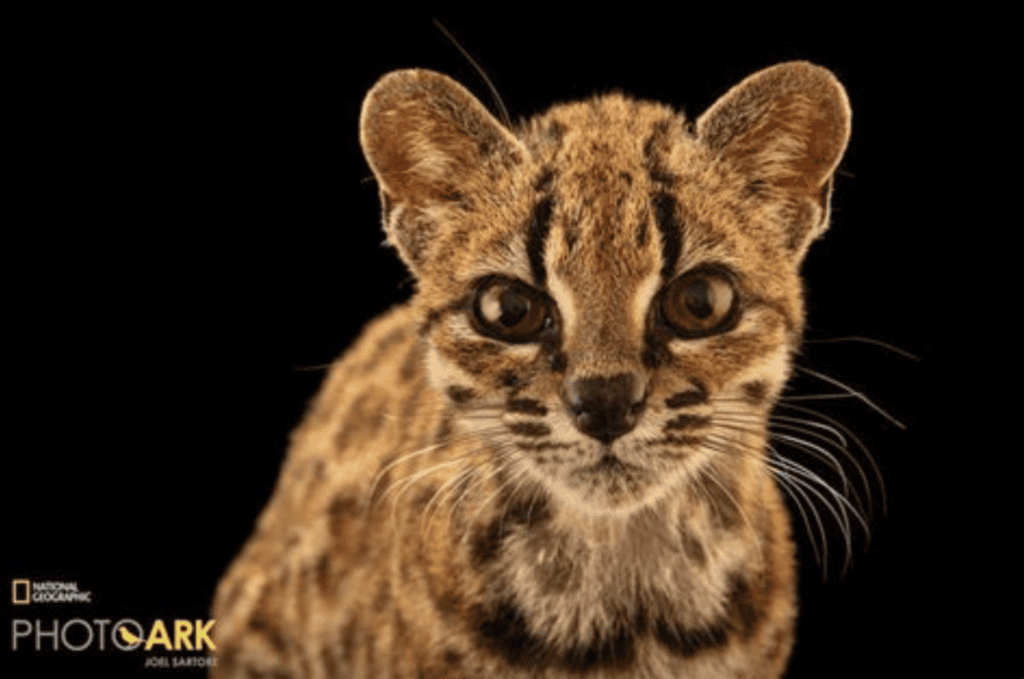
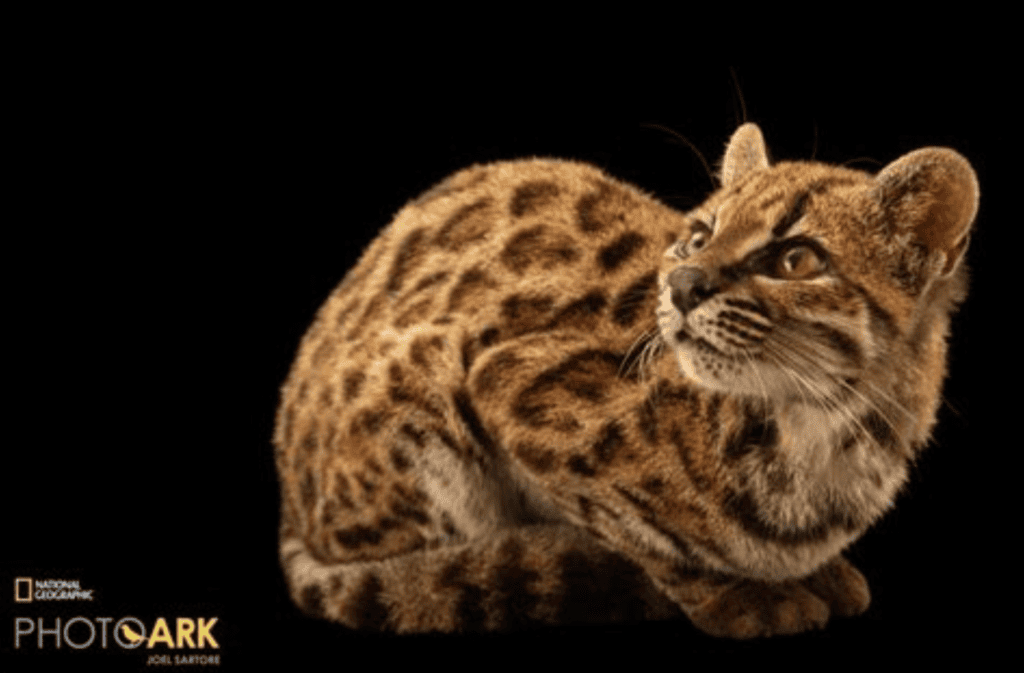
Having survived undetected by modern science for over a hundred years, the newly named Tilcayo tiger cat is being rapidly displaced by habitat loss. This diminutive cat weighs around three pounds and measures an average of 18 inches long, making it smaller than the typical domestic cat. Yet, its survival is entirely dependent on the fragile cloud forests of the Bolivian Yungas.
The Bolivian Yungas, a transition zone where the Andes Mountains meet the Amazon rainforest, is one of the least studied areas in the Neotropical realm. It’s characterized by frequent low-level cloud cover at the canopy level—a phenomenon known as Silvagenitus. Despite covering only 1% of global woodland areas, these cloud forests are among the world’s most biodiverse biomes, holding 15% (roughly 3,700 species) of global plant and animal diversity. About half are restricted to the forest’s unique climates.
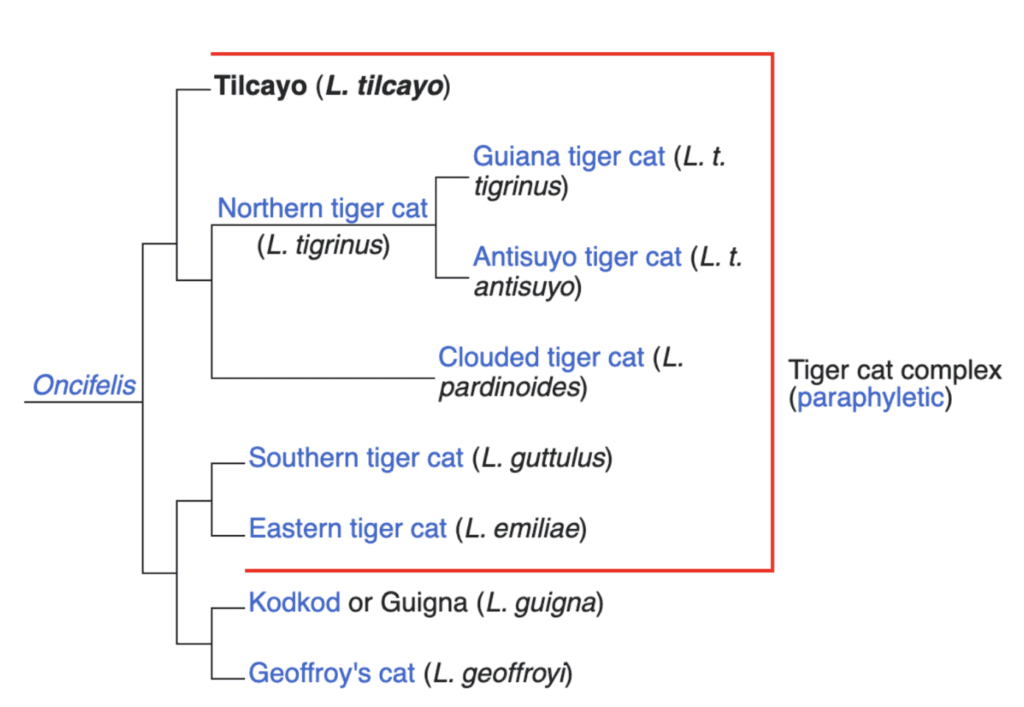
The Tilcayo cat evolved within the dense, humid cloud forests for over 1.4 million years. One of the most in-depth studies of the tiger cat species was by Jonas Lescroart, an ecologist at the University of Antwerp. He recently revealed that what scientists once thought was a single, generalized species—the tigrinus complex—is actually a grouping of five distinct tiger cats. Among them is the newly described Leopardus Tilcayo, the first extant cat species formally described since 1923.
Historically, the Tilcayo went unnoticed because it was classified as a cryptic species, meaning it’s almost morphologically indistinguishable from other small wild cats. For decades, they were confused with oncillas, margays, or lumped generally into Leopardus Tigrinus alongside tigrinas and tigrillos. Scientists finally branched out their research to old museum specimens, identifying them as Tilcayo cats instead of previously thought Oncillas by a highly specific trait: the forward direction of the cat’s nape hairs.
While science only recently documented its recognition as its own species in 2026, locals have a history with the cats. The first live encounter by modern observers was only possible because of a man from La Paz in 2017 and his misidentification of the Tilcayo as a domestic cat. It was nursed back to health on human food before being turned over to the Senda Verde Wildlife Sanctuary after recognition of its wild nature, where the now ten-year-old cat still resides.
Before scientific identification, local communities had orally passed down the name “Tilcayo” from generation to generation. While it has no direct translation in modern languages, native Aymara speakers reached out via social media with a likely linguistic origin: the term “t’ili kayu”, which translates cleanly to “tiny foot”.
Despite its recent categorization, the tiger cats are already a deeply vulnerable species who have already faced a steep 63% population decline. Because the Tilcayo is an indicator species highly adapted to the stable, moist microclimate of the Yungas, it allows scientists to identify imminent threats to the cloud forests. The cats are so heavily adapted to the forests that migration for them is simply impossible, making the loss of the cloud forests simultaneous with the loss of the cats.
The forests they depend on are vanishing due to agricultural expansion, human development, gold mining, and the new threat of fires. Under normal circumstances, wildfires shouldn’t even be possible in such a moist climate. Yet, due to Earth’s ever-rising temperatures, the forests are drying out, creating the possibility for fires to take root. Deforestation removes the crucial canopy cover that allows for the condensation of clouds and humidity. Compounding the issue, these vital ecosystems are being pushed to higher elevation points, shrinking the cat’s available habitat for decades.
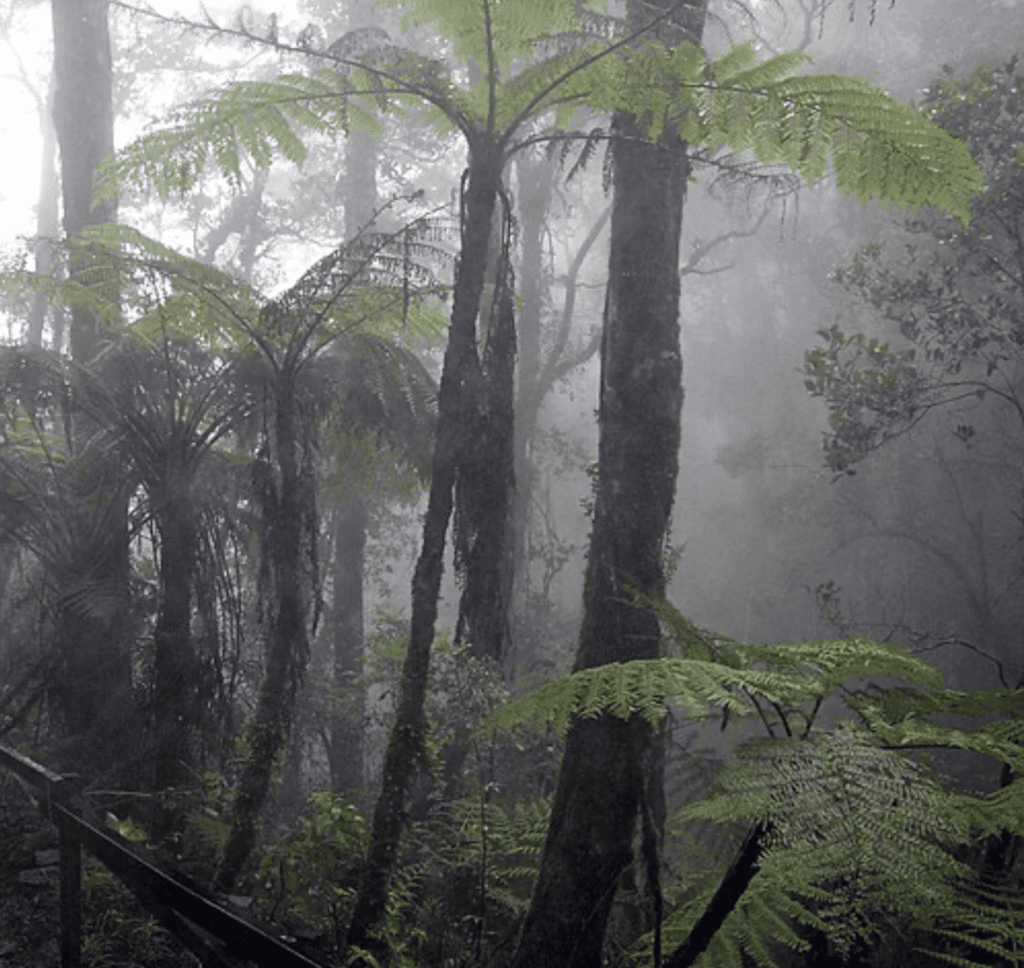
The destruction of the cloud forests causes humans to lose a critical life-support system. These forests play a vital role in regional hydrology, doubling rainfall levels, and stabilizing mountainsides with dense vegetation to prevent catastrophic landslides. The biomass and peat-heavy soils capture immense levels of atmospheric carbon dioxide, keeping greenhouse gases out of the atmosphere.
The fate of the Tilcayo tiger cat and the Yungas cloud forests are inextricably linked; the disappearance of one signals the destruction of the other. Protecting the newly described cat means safeguarding a biome that stabilizes the global climate, filters water, and protects communities from tragedy. In the words of the researchers: “Every new species identified is a call to action for the preservation of the remaining wild places. It’s a new reason to protect the world.”