
By Ella Fortine, Staff Writer
Tucker Carlson’s recent interview with Nick Fuentes has shown that mere quiet signaling might no longer be necessary for extremists in today’s Republican party.
Nick Fuentes has committed the one cardinal sin of the Republican Party: saying the quiet part out loud. In doing so, he represents just how much has changed since the Grand Old Party’s days of yore. Fuentes, and the current infighting he started, is emblematic of the mask-off style of politics that does away with dog whistles in favor of train horns. But the question remains, will the old guard stand for it?
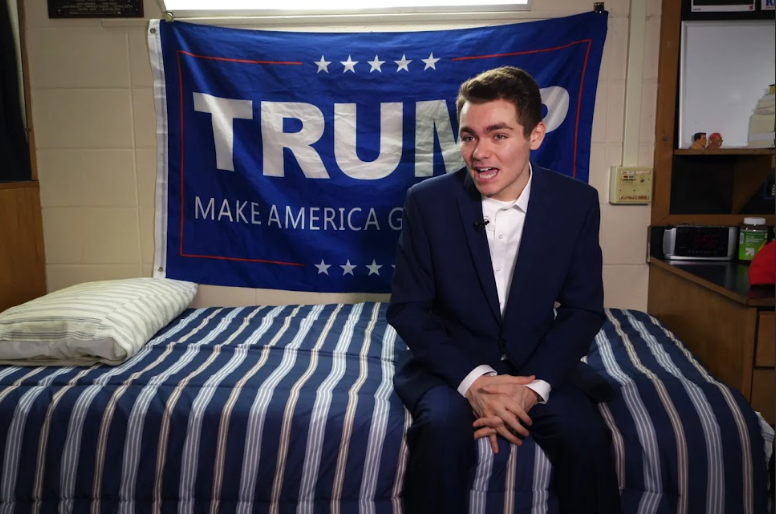
Starting out in 2016 as a political livestream host, Fuentes and his online army of “groypers” have become infamous for their far-right, hateful rhetoric and extremism. However, until as of late, the majority of mainstream conservatives have rejected Fuentes’ statements and methodology—though notedly, not necessarily his all views. For instance, Fuentes has been repeatedly called out for his virulently antisemetic statements, notably by Charlie Kirk, with whom Fuentes’ fans had engaged in an online feud with. Kirk denounced Fuentes as a “jew hater” who he would not align himself with. Kirk also had, in past statements, bred the same conspiracy theories about Jewish control of the media and the economy that Fuentes’ groypers wholeheartedly subscribe to. The mainstream right has had an issue with Fuentes, and others like him. That issue, however, is not the beliefs or opinions they hold, but the bluntness to their words. Therein lies the wedge.
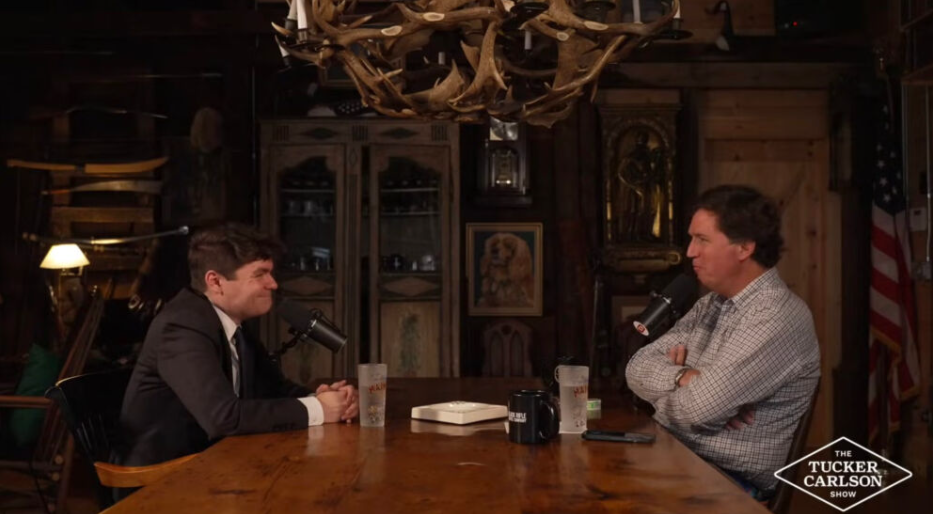
In the aftermath of a recent interview with Fuentes by Tucker Carlson, longtime right-wing commentator and former Fox News host, mainstream conservative groups fractured. The president of the Heritage Foundation immediately defended Carlson for platforming Fuentes, then issued an apology days later. The Jewish Leadership Project broke from the group and chastised Heritage for their defense of Carlson. Carlson, for his part, focused his pushback during his interview on Fuentes’ tendency for infighting and how to coat his antisemitism. He advised Fuentes to not go after fellow conservatives and to focus his sentiments through an “America first” lens. What he did not do is disagree with Fuentes’ repeated conspiracy theories and hateful statements. Again, the issue here seems to be all about the words, not the message. This is an extension of the long-time “Southern Strategy” of the right, a strategy that may be slowly dying out, but perhaps leaving something worse in its wake. Nick Fuentes doesn’t feel the need to say “globalists” when he believes he can say “organized Jewry”.
Throughout both Trump terms there has been an increase in bare-faced extremism; the president himself has on several occasions unabashedly made hateful or extreme statements. His administration has made statements like Fuentes’ the new norm. Fuentes’ account was reinstated on X by Elon Musk, he faced no repercussions for his involvement in the January 6 assault on the capitol, and was invited to dine with the president at Mar-a-Lago. In the era of Trump, those who are as loud as Fuentes with their hatred are celebrated. The fight within the Republican party goes beyond Israel and foreign aid, it is a snuff film for subtlety being showcased through the rise of those whose language—not ideas—may be too extreme for polite rightist society.