

By: Noemi Martinez, Staff Writer
In light of the longest recorded government shutdown in the United States, SNAP benefits were suspended for over 42 million Americans who rely on them monthly. How did this affect Americans?
What are SNAP benefits?
SNAP stands for Supplemental Nutrition Assistance Program, a program dedicated to providing benefits to low income families to help make food available to all, regardless of economic status.
During the month of November, millions of Americans lost contact with monthly aid and lost access to food. This issue was caused partially by the government shutdown, but also difficulties with funding. As a result, nationwide confusion and worry spread into the minds of Americans and state governments. Some states, in an effort to preserve stability, tapped into personal stores in order to continue benefits for citizens. After multiple states, mainly democrat-led, sued to have funding restored, a judge ordered that benefits must be restored. The current administration claimed that only 65% of benefits would be reenacted, but the judge ordered full benefits, requiring the federal government to dig into restores to satisfy the needs of Americans.
Thankfully, the government shutdown has ended. However, the effects are still felt throughout the homes of Americans struggling to choose between necessities such as food and housing. Processing of new SNAP applications are delayed for many new applicants. W.I.C. benefits which focus on meeting women, children, and infants needs are expected to operate normally with some potential disruptions state to state.
The government shutdown is a problem that only scratches the surface of issues relating to poverty and food insecurity in American homes. 1 in every 8 Americans are reliant on SNAP benefits to sustain their families, an incredibly large number. It poses a deeper question, why are so many Americans reliant on food stamps?
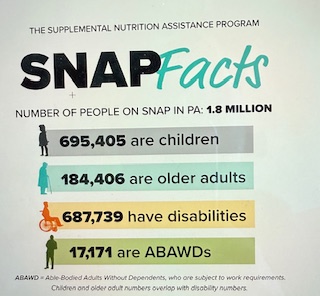
(Snap-Photo-2) According to the Center on Budget and Policy Priorities, over half of Americans receiving food benefits are from families containing children (Nchako, Cai). Additionally, 37% of all families feature seniors and disabled individuals. A large portion of those dependent on SNAP are people who cannot generate revenue themselves, whether it be senior citizens, children, those with disabilities, or disabled veterans, many cannot provide for their families themselves. Even households with incomes still depend on food stamps, and this results from a deeper issue.
Americans cannot afford all the necessities to live. People have to balance between making rent, affording food, and other monthly expenses. An unfortunate reality is that a large portion of citizens cannot meet every one of these needs. With the ever rising prices of necessities, it is no wonder that so many people depend on food stamps to help contribute to their household stability. During times such as these, it is critical that the federal and state governments support people on a personal level to maintain integrity of the home.
The following sources were referenced in the creation of this article:
Nchako, Catlin, and Lexin Cai. “A Closer Look at Who Benefits from SNAP: State-By-State Fact Sheets.” Center on Budget and Policy Priorities, 13 Feb. 2023.
“What the Government Shutdown Means for Food Assistance.” Feeding America Action, 7 Nov. 2025.
News, PBS. “As Shutdown Ends, States Scramble to Send SNAP Benefits to Millions.” PBS News, 13 Nov. 2025.