


Written By Ella Fortine, Staff Writer
What does the major increase in the use of prediction markets mean for the future of the country?
As we open 2026, there are many who hope for a brighter future and look to the new year with optimism, hoping for a fresh start and new opportunities. Opportunities like being able to bet thousands of dollars on quite literally anything, from the United States’ invasion of Greenland to the next top Netflix movie or the extinction of the human race, all easily accessible on increasingly popular “prediction markets” such as Kalshi or Polymarket. Kalshi in particular celebrated the new year with a record daily volume of 291 million dollars, a clear representation of the growing attractiveness of these types of markets. The question remains however: is the garnering of such massive attention and revenue for better, or worse?
Kalshi and Polymarket both function as online platforms where users can place bets, or, if the CFTC (Commodity Futures Trading Commission) is listening in, purchase future shares of the concept that Iran will be bombed by the end of the month. Through such flawless finance bro loophole maneuvering, Kalshi has been able to smoothly limbo under anti-gambling provisions in the U.S., while Polymarket learned the grift the hard way after being banned throughout the Biden administration. While perhaps a tad on the shady side, these prediction markets are legal and remain free to do business in the country, and they have been doing business. As previously mentioned, the platforms have ensnared incredible portions of the American population and their money. Kalshi and Polymarket have been valued at $11 billion and $9 billion respectively, and quite a few bettors have made a pretty penny themselves. Most noteworthy of the lot being the anonymous winner of $400,000 after betting on the capture of Nicolás Maduro just hours before the operation was announced by President Trump, which was not in any capacity the result of insider trading. At all. But…
Insider trading is one of the major concerns of platforms like these. Individuals with unique access to information about the outcome of an event have the opportunity to bet and win large sums of money on the result of a prediction they know the answer to. While insider trading is explicitly banned by the platform and is an illegal activity, when has that stopped anyone? The effectiveness of a rule depends on its enforcement, and that is seemingly up in the air, as Kalshi rushes to placate trade law and New York legislation pushes forward a new bill specifically condemning such activity. Such activity that becomes especially concerning when the not-gambling-gambling goes beyond a college basketball game and becomes a life changing influence on policy and public opinion. The platforms themselves have lauded the capacity of their markets to act as reliable data when considering future political events, because an ad campaign works best when you can cast your company as both a way to get away with sports betting and a steady touchstone for the American consciousness.
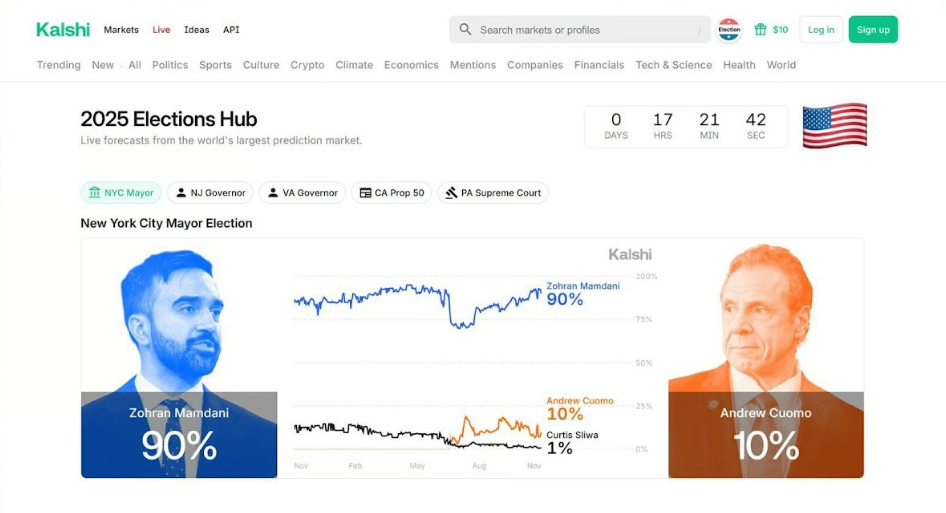
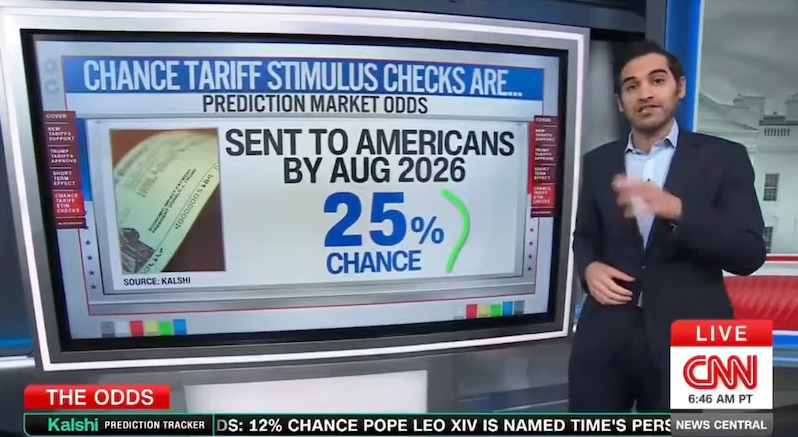
This intentional positioning as simply another type of political poll data has major implications, exacerbated by the recent multi-year deals signed by Kalshi with both CNN and CNBC. These deals allow the outlets to incorporate Kalshi’s prediction data into their broadcasts, but this raises a few red flags. Prediction market data is not the same as poll data. It represents where bettors are placing their money which is influenced by factors beyond the bettors individual opinions or choices, whereas verified polling represents the desires and intentions of a population, from which predictions can be extrapolated by experts. For example, a percentage of a population may personally root for and vote for a candidate, but, believing their chances to be slim, place an opposing Kalshi gamble. Thus, Kalshi’s data does not accurately represent the intentions of that percentage of the population, but rather what their view of the odds are, in essence reducing the prediction of impactful political events like election results and major policy change to a summation of Wall Street gamblers’ best guesses. Now, if that was exactly how the data was being presented on the morning broadcast, there wouldn’t be much of an issue. This isn’t the case. Regarding whether Americans would receive tariff stimulus checks by August of 2026, CNN chief data analyst Harry Enten cited a 25% chance declared by Kalshi users, emphasizing that “the American people right now are craving some relief, and at this point, it doesn’t look like it’s coming,” creating more certainty than perhaps is due.
While prediction markets are a seemingly new kind of beast that carries with it many creases that may be ironed out in some senate committee hearing, there is, as the saying goes, nothing new under the sun. These markets are nothing new, and they hold a daunting historical parallel. By the end of the roaring 20s, common Americans felt secure in making wild stock market gambles. Many even took out loans to pay more and more on stock market speculation, which as we know today, led to a panic by investors who suddenly saw their stock drop and ended up in massive debt. Which means more stock dropping in price and the cycle continues, creating ever more panic and resulting in the stock market crash of 1929, directly preceding the economic downspiral into the depths of the Great Depression. Of course, Kalshi and Polymarket are not the stock market, and economic decline happens because of a variety of factors. It does however remain eerie how in a time of increased economic stress and anxiety, the public jumps to speculation and gambling with the future in order to win a chance at fortune. Is it a sign of worse things to come, a warning not to roll the dice? Well, you can probably make a bet on it.