
Written by Lyle Weems, Editor
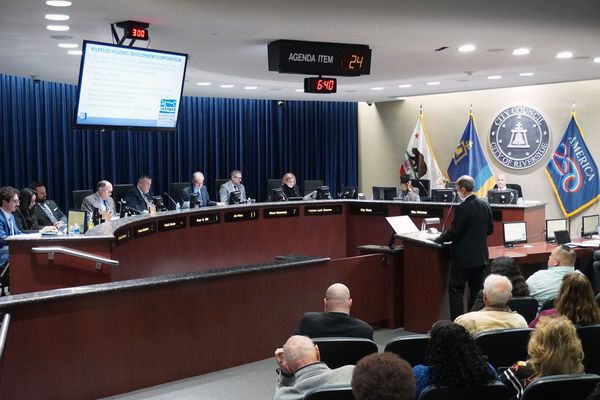
In February, 2026, in a close 4-3 vote, Riverside City Council denied a $20 million state grant for a low-income housing project.
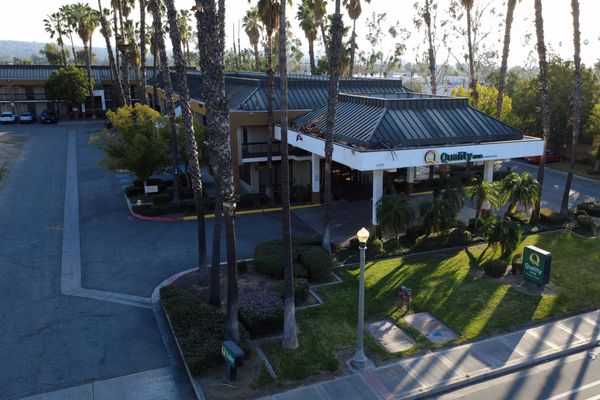
Proposed by the nonprofit organization the Riverside Housing and Development Corporation, the grant’s base followed the conversion of the Quality Inn motel on University Avenue into 114 studio apartments for low-income seniors and houseless individuals trying to exit homelessness. Of the seven City Council members, Clarissa Cervantes, Jim Perry, and Steve Hemenway voted in favor of the project, while Philip Falcone, Chuck Condor, Sean Mill, and Steven Robillard voted in denial.
The University Terrace Homes project would be protected for 55 years under this grant, meaning the property would not belong to the city, but remain under the control of RHDC. This would ensure stable housing to meet the rising affordable housing needs for generations.
This contentious issue has sparked much debate on issues of housing and civil rights. In fact there is a threat of organizations such as the ACLU filing lawsuits against the city against this considered lack of care for civilians. Housing has historically been a repeating challenge in California, especially in the context of the State witnessing increasing amounts of houseless individuals.
The 2016 Housing First strategy, being used in this plan as it calls for housing first and then providing resources to alleviate the tenants mental health and health issues after, is criticized by conservative leaning individuals. Housing First is often viewed as a free ride for the houseless, as it supposedly does not support accountability or require sobriety tests before entering housing programs.
Council member Mill, in fact, comments in relation to this notion that giving homes to such people without checks simply pushes the issue of mental health and addiction aside. Cervantes, another Council member retaliates from this thought, finding housing a critical first step in helping them as people cannot accept supported growth in a constant state of fear.
Expanding on the idea that stability allows improvement, within Riverside since 2018, the Housing First model has proven to increase housing stability, improve quality of life, and maintain status as cost effective.
Other opposition to the project came in the form of community members. The Bailey family, owners of the Farmhouse Collective which has recently brought much business to the same University area as the housing project, did not support this project existing in proximity to their business. This highlights a recurring issue in American society, that people would rather the problem disappear or condemn the people and victims affected, then take the first step in fixing it. It is a completely self-serving ideology.
There were also concerns regarding the project’s proximity to UCR, and the threat of an increase in crime that might push prospective students away. The Quality Inn workers stood against the 20 that would lose their job with building reassignment. There also remained general concern about logistics and cost, as Riverside would still have to pay $9 million tax dollars.
Bruce Kulpa, a representative of RHDC retaliated by ensuring that safety was not an issue. The plan was developed following guidance of other Housing First projects before. The apartments would be inside a gated community with 24 hour security. They also assured of strict rules regarding tenants behavior, and support systems to help tenants against substance abuse would be ready. In fact, the project was more likely to reduce crime and revitalize the area as people are able to get off the streets and rejoin working society.
While the City Council is officially nonpartisan, this decision hints at a conservative lean with members and Riverside communities. Fall elections of the city council are very soon, and the effects of this decision are likely to be a factor in that vote. The issue of homelessness support programs most often becomes an issue of self interest vs. social responsibility. Though there is hope that all might be provided housing and basic necessities, the likelihood is that politicians will continue to ignore this problem under prejudice and disgust.