


Written by Josephine Grey, Staff Writer
On November 3, 2026, American voters will elect congressional and state officials whose decisions could reshape abortion rights and women’s healthcare access.
As the November 3, 2026 midterm elections approach, abortion rights and women’s healthcare access remain important issues across American Politics. With the presidential elections receiving the most political publicity, midterm elections can influence healthcare policies by determining which political party controls Congress. Outcomes of governors taking office and lawmakers shaping state legislation could affect abortion access, reproductive healthcare funding, and the ability of patients to receive medical treatment.
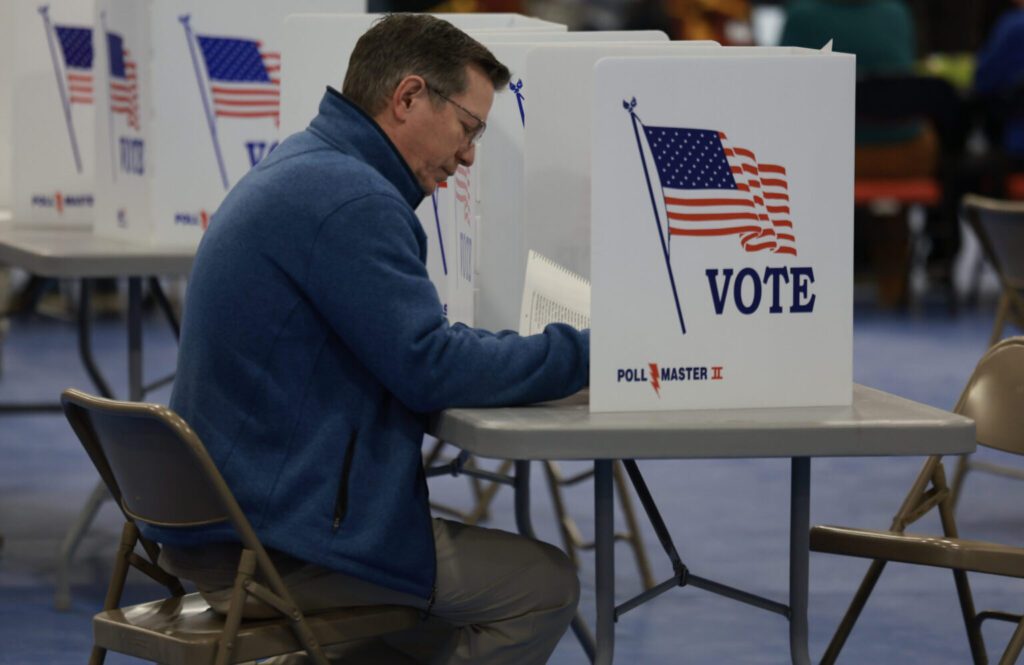
The midterm elections happen halfway through every four-year presidential election cycle, allowing voters to have a chance to decide which party controls Congress. The balance between the House of Representatives and the Senate ensures harmony in federal legislation, approving government spending, and overseeing federal agencies. Depending on the party that gains control, Congress could pursue drastically different approaches to abortion policies and reproductive healthcare.
As midterm elections draw nearer, lawmakers nationwide debate the moral and scientific aspects of abortion, protections for abortion access, and funding for healthcare programs. However, passing legislation requires overcoming procedural and political obstacles, and the president can veto bills. As a result, a change in congressional control would not automatically change abortion laws nationwide. It would, however, influence which policies receive consideration and how aggressively Congress pursues them.
The effects of the midterms extend beyond Washington, D.C. Since the Supreme Court overturned Roe v. Wade in 2022, states have gained greater authority to determine when and under what circumstances abortion is legal. As a result, gubernatorial and state legislative elections can directly affect reproductive healthcare.
States with restrictive abortion laws may elect officials who seek additional limitations, while other states may elect officials who support legal protections for abortion services. State governments can also influence access through healthcare regulations, funding decisions, and policies affecting medical providers.
These differences have created a situation in which access to abortion varies considerably depending on where someone lives. The Guttmacher Institute, a leading research and policy organization committed to advancing reproductive health in the United States, reported in June 2026 that 13 states enforced total abortion bans, while 28 other states restricted abortion at some point between six weeks of pregnancy and fetal viability. These restrictions can affect whether patients can get care locally or must travel to another state.
Another major issue is medication abortion, which allows patients to end an early pregnancy using prescribed medication. Federal regulations, court decisions, and state laws all influence how these medications can be prescribed and obtained.
Telehealth, an organization focused on the delivery of health care, education, and administrative services, has become an important option for patients who cannot easily visit a provider in person. Some states have also enacted shield laws, which aim to protect healthcare providers who offer legally protected reproductive services to patients in states with abortion restrictions.

In May 2026, the Supreme Court blocked a lower-court order that would have restricted the nationwide distribution of mifepristone, leaving existing federal rules in place as litigation continued. Future court decisions, federal agency actions, and legislation could change the rules governing medication abortion. The midterm elections may influence these developments by changing congressional oversight and the political environment surrounding federal healthcare policy.
The 2026 midterms will not dissolve every disagreement over abortion or reproductive healthcare, though the results could influence which proposals make it to the next round and how state governments approach reproductive rights. Ultimately, the midterm elections are an opportunity for voters to influence the officials responsible for shaping healthcare policies.