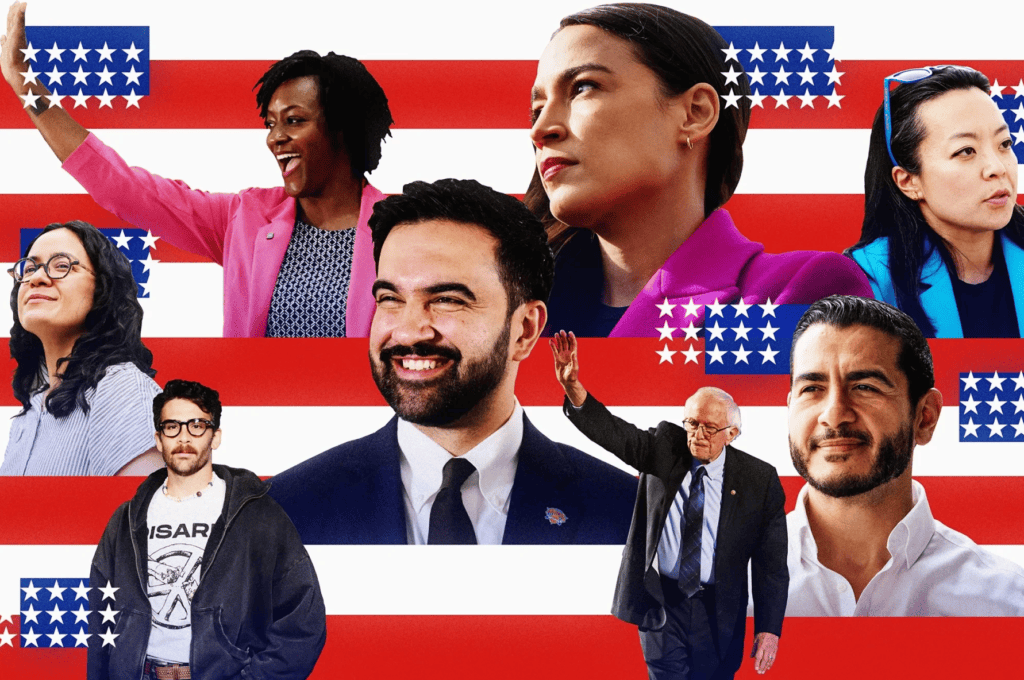

Written by Zander Hix, Staff Writer
Democratic Socialists see their congressional representation quadrupled as voters massively reject the Trump administration
On Tuesday, November 3, 2026, Americans went to the polls to decide control over local state offices, and most notably, which party will control the United States Senate and House of Representatives. Following two years of the Trump administration, the elections were widely seen as a referendum on Trump and the Republican Party, who have had complete control over both chambers of congress since his victory against Kamala Harris in 2024—implementing controversial far-right policies, and most notably, sparking a war in Iran.
As results began to trickle in, Democrats all over the country began to win big; flipping seats the party has not held since the Great Depression. Winning every swing state and regaining control of both the House of Representatives and the Senate, Democrats managed to outperform polling, which typically overestimates Democratic support.
Not only expressing clear discontent with the policies of the Trump administration, voters came out in support of typically unpopular candidates aligned with the far-left of the American political spectrum—sentiments not typical for Americans usually fearful of more radical, left-wing politics.
The common denominator among winning left-wing candidates? They’re members of the national Democratic Socialists of America, an organization uniting left-wingers and socialism from across the country. Staunchly against Trumpism, the Democratic Socialists of America advocate for increased taxes on billionaires, the abolition of ICE—which the Trump administration has made a focal point of Trump’s second term—and Medicare for All, carrying on the tradition of Bernie Sanders.
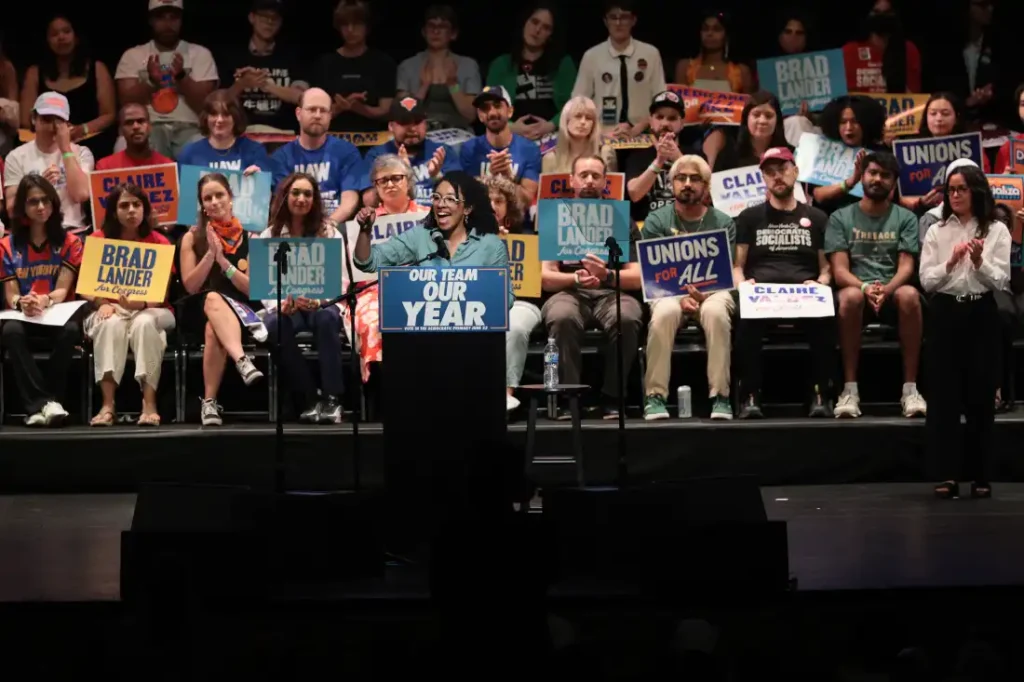
Rising from just two congressional representatives to eight, the new caucus of Democrats is not only going to be more left-wing than before, but potentially, the party as a whole will move left. The (unexpected, in many cases) victory of Democratic Socialist candidates in Democratic primaries saw new populist campaign tactics being utilized, aiming to drive turnout and convince voters—championed by New York mayor Zohran Mamdani, a key figure in the rise of Democratic socialist power.
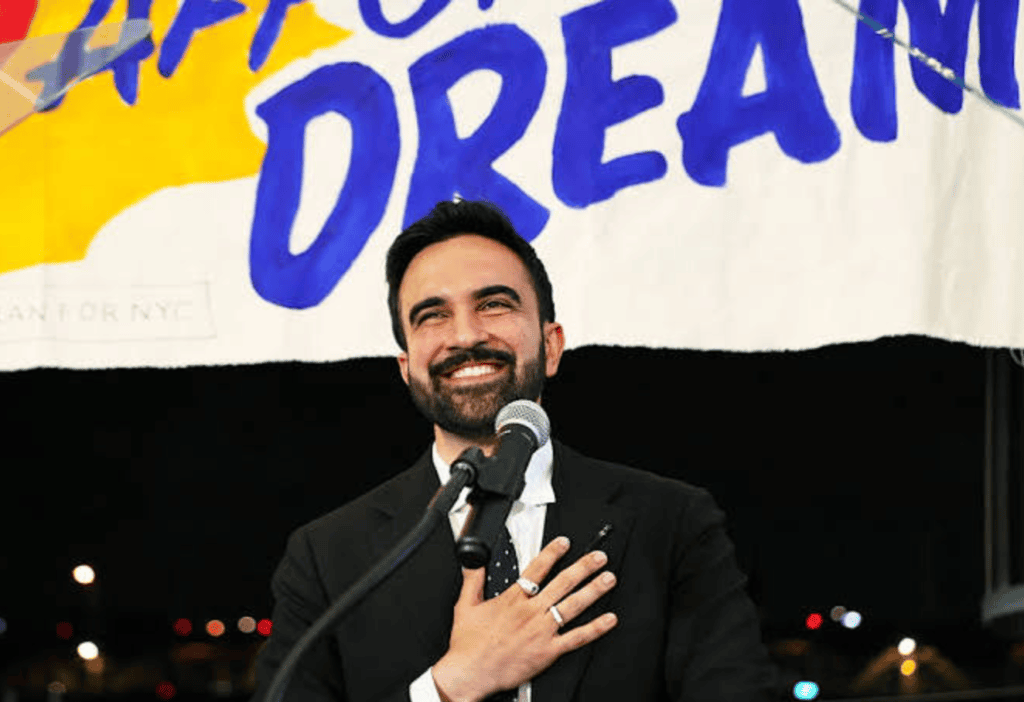
Taking the city—and the world—by storm, Zohran Mamdani’s victory in the Democratic primary and general election was impossible without the national Democratic Socialist organization funding and building the foundation for his campaign. Appealing to voter discontent and weaponizing anti-establishment views against the Trump administration, Mamdani’s groundbreaking politics saw Democratic Socialist membership double from 60,000 to 120,000 members in the year following his campaign, bringing important visibility to the DSA and leading to its impressive midterm performance.
Beyond opposing the latter half of the Trump administration’s policies and aiding the development of Democratic Party policy, elected Democratic Socialists could become especially important during presidential season. As left-wing candidates emerge from the Democratic Party, the DSA could set up their own candidate for the presidency. Alexandria Ocasio-Cortez’s proximity to the DSA as a member of the local New York chapter (though she has lost endorsement from the national DSA) could see her potential campaign for president supported by DSA elected officials, offering crucial support in what is likely to be a contentious primary.
Whether or not the DSA’s rise is to be sustained is uncertain, but their influence is already apparent. If luck is on the DSA’s side, in just two years they could see “socialism” transition from a dirty word in American politics to an adjective to describe the president.