

Written by Isabelle Termath, Staff Writer
Mitski released her eighth studio album, Nothing’s About to Happen to Me, on February 27, 2026. Compared to her older discography, does it bring anything truly new to the table?
At the end of February the acclaimed indie artist, Mitski, released her eighth studio album, “Nothing’s About to Happen to Me”. She returns to the studio with previous collaborators such as producer Patrick Hyland and her band that was featured on the tour for her last album, The Land is Inhospitable and So Are We. Musically, it seems to be a continuation of her latest work; featuring gentle strings, powerful drums, and steady vocals, Mitski is once again leading us back to a soundscape of tenderness, warmth, and patience, all with a quiet anxiety brewing underneath the production. Lyrically this album tells the story of a woman, a recluse, who battles with isolation, codependency, and a desire to change for someone else. Listeners follow the narrative through settings such as a vast lake, an unkempt house, and a bustling bar. The landscape, both sonically and lyrically, is one that is rich with texture and vivid imagery.

The opening track, “In A Lake,” is an alluring number that contemplates the disadvantages of small towns, the benefits of big cities, and the comfort of nature. The speaker’s priority seems to be to disappear in the background and to go unnoticed. She remarks how this is impossible in small towns, but “in a big city, you can start over”; this demeanor sets the precedent for what is to come from the central theme of the album: a longing to be alone. It is a strong first track, with tension that spills over into a loud climax near the end.
The second song, “Where’s My Phone?”, is the first single of the album. It is an anxious, up-beat song and describes the experience of trying to disassociate from reality through the distractions technology provides. It is frantic and highlights the absurdity of needing to be scrolling on social media in order to placate one’s anxieties. The vocals and instrumental dissolve into a mindless repetition of Mitski singing “pa-pa-pa-pa” over a production that gets increasingly fuzzy until its conclusion. As a lead single, it accomplishes the ambassadorship of the album, showing the audience what they can expect both instrumentally and thematically.

The third song, “Cats”, is a melancholic story of a person who is seeking comfort in their two cats, one whose owner is their former partner, after the end of a relationship. They cling to the last connection they have with their love, emphasizing the emotional dependence they have on this person and their cats. She laments how she has tried changing for this person but that it did not help or fix anything. The motif of isolation is once again seen as the speaker spends the entire song in their home waiting for them to return until they accept that the relationship is over.
“If I Leave,” the fourth track, builds on the premise of a relationship that is ending. This time, the speaker is considering whether she should leave her partner as she envisions what her life would be without them. It is an emotional roller coaster that is reflected in the production, with many instrumental highs and lows. The lyrics seem to be her mind’s reasoning as to why this relationship should end, but the instrumental represents the emotional tumult, or fear of peace without them, at the mere thought of it.
“Dead Women” is a perplexing track that combines both morbidity and humor. Including a reference to Virginia Woolf, the speaker ponders how people in her life would deal with her death, which possibly paints her story as heroic. It is thought-provoking, and features ominous vocals and an eerie instrumentation.
The sixth track, “Instead of Here,” once again discusses solitude. The song describes the desolation of a mind that has secluded itself from the world, with the chorus consisting of a single striking line: “I’m not here, I’m where nobody can reach.” It features unsettling images such as Death crouching beside her and the disillusionment of what love should be. This track, while sounding very pretty and captivating, is an example of how the lyrics on this album can sometimes become convoluted. It is difficult to follow the turns of the narrative, with the tone and subject matter shifting rather quickly. However this structure serves to convey the erratic mind of the speaker. While it may take a few listens to fully absorb what is being said, the tangled narrative only advances the story further.
The seventh track, and second single, is “I’ll Change For You”. It illustrates the hope and desperation one may cling to after a relationship is over. The speaker proclaims, “If you don’t like me now, I’ll change for you”, highlighting how far people will go for love. Additionally, the theme of isolation is once again explored on this track; the main character has finally left her home to visit a bar, whose ambient sounds are included as an engaging texture. However, despite finally finding herself among others, she asserts that she still does not “have anyone at all”. Instead of appeasing her loneliness with her phone, she copes through alcohol and by surrounding herself with similar people. This track is layered, going in different areas to expand on themes already established. The instrumentals are precise and beautiful and lend themselves to a song that is the highlight of the album.

In “Rules,” we delve into perhaps the weakest song on the album. This is a commentary on how Mitski feels pressure to comply with societal rules and fit in. It consists of a single long verse, where she lists these many rules, and a bare chorus that simply counts from one to five. It is not very interesting, but does discuss a very relatable topic. However, it does not elaborate any further than simply saying what these pressures are. It would have been interesting for her to expand on what exactly these rules mean to her. What happens if she does not comply? What happens when she does? How important does she view these rules as beneficial to her in life and as a public figure? How do they affect her private life? All very intriguing questions that remain unanswered on this lyrically sparse track, resulting in a very disappointing execution.
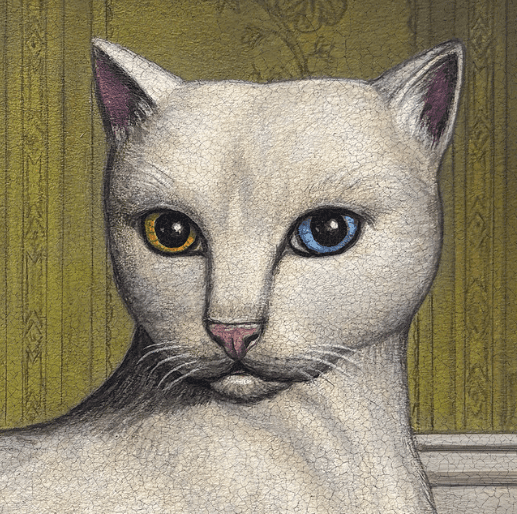
The next track, “That White Cat”, surpasses what “Rules” attempted. The song is a remark on people-pleasing as the speaker feels so pressured to bend to society’s expectations that she feels she is paying rent for the white cat that wanders in her neighborhood. It highlights how she feels everything she does is for others; her apparent goal is to provide for them, and it is only an added benefit when the fruits of her labor benefit her. Drums are once again brought to the front of the production, and add to the frustration felt by the narrator. It is one of the more interesting tracks on the album, delving into one of the central themes of the whole collection of songs.
“Charon’s Obol” is a very mysterious track. An allusion to the Greek deity, Charon, it describes a woman paying tribute to the dead by feeding the hounds of “Dead Women” after becoming a caretaker of the dogs and the house. It comments on mortality, what we may take with us, and what we leave behind. It is accompanied with a gorgeous choir of voices and bring that same ghostly aspect seen on her previous album.
The final track, “Lightning”, is a very satisfying end to an album as dense as this one. We once again talk about nature. This time, instead of swimming alone in a lake, Mitski imagines herself as rain that falls from the sky. It brings to attention the cyclical nature of the speaker’s circumstances since even if she leaves that lake she will always fall back into it. A different interpretation could be that the rain is a symbol for rebirth and new beginnings. Thematically, it ties the story up into a perfect knot, touching on each theme presented. We began this journey looking for a way to start new, and we end it with a final resounding conclusion.
Overall, this album does not do anything new sonically; these are sounds we have heard from Mitski before. While they are enchanting they can become quite dreary at times, especially when listened to in succession. However, Mitski dives further into themes of mental health, love, and nature, in a way she never has before. Almost every lyric is deliberate, each line serves a purpose to propel the story forward. It is a solid addition to her extensive discography and yields such wonderful moments such as “I’ll Change For You,” “That White Cat,” and “In A Lake.” It is a lovely album and a great show of talent from her that inspires confidence in listeners for what she will produce in the future.