

Written by Ella Fortine, Staff Writer
Trump’s iron groping hand, er, fist has been brought down on Cuba, but the cavalry has come via flotilla.
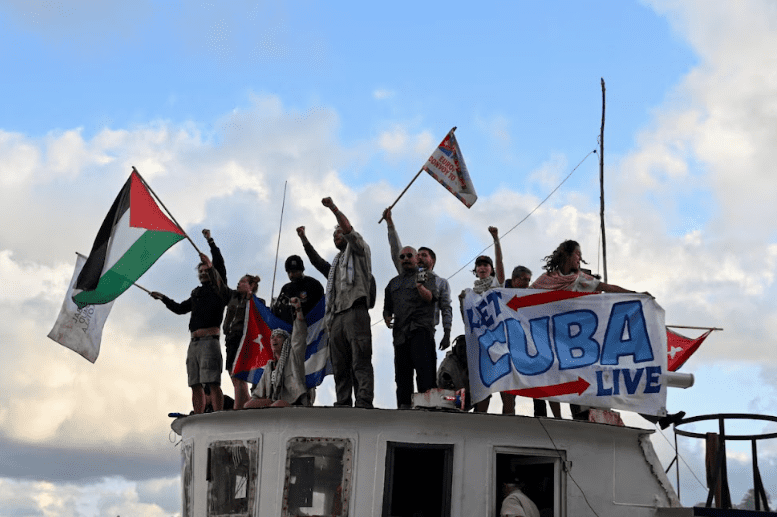
At the end of the first month of 2026, President Trump signed an executive order that has impacted the lives of those in Cuba detrimentally. That executive order, number 14380, both imposes tariffs and strict trade and oil embargoes on the island nation. This new embargo however, is not anything new for the Cuban people, who, since the 1960s, have suffered from U.S. economic intervention. What is new this time around is the dozens of American citizens who joined aid missions to the nation at the end of March. It is a new chapter of the economic war on Cuba, and those on the left have a new strategy for standing in solidarity.
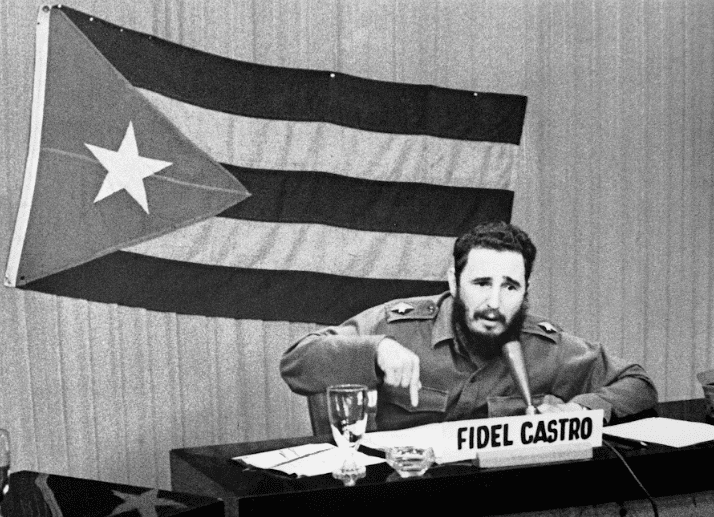
By the end of the Cuban Revolution in 1959, Fidel Castro and the new communist government of Cuba had nationalized the properties of several American companies that had a great interest in continuing their use of their land for extraction of sugar, oil, and tobacco. This, along with the mere existence of a communist country in the American backyard, was unacceptable to the U.S government, which, in 1960, imposed a strict export embargo, and later, a total trade embargo. After the Cuban Missile Crisis in 1962, President Kennedy authorized a naval blockade of the island. Most of these restrictions have remained in place to the modern day, with only a brief thawing of tensions under Obama from 2015 to 2017. The vast majority of what makes up the economic blockade of Cuba has been unchanged for 66 years. January’s executive order is by far not a new or unprecedented action, but Trump’s tightening of the noose has pushed Cuba to its limits. Cubans are facing constant blackouts, power outages, shortages of essential products, and numerous challenges arising from the extreme scarcity of oil.
By now, taking things to the extreme has become the president’s MO, and Americans on the left—and occasionally the center—have mobilized massively against the unpopular Iran War, arrest of Nicolas Maduro, ICE action, and more. In response to the new wave of economic attacks on the Cuban people, the Nuestra América Convoy was organized, which garnered significant attention as American citizens packed their bags for Havana with food, medicine, and other aid that is impossible to send to the country from the U.S. due to the embargoes. The presence of some recognizable figures, such as political commentator Hasan Piker and Irish band Kneecap, brought further attention to the conditions imposed on Cuba, with members of the convoy recording and sharing what they saw. After decades of the American public letting the Cuban plight become background noise, this convoy has made that struggle front and center in the media ecosystem.

The hardships experienced by Cubans today is an extension of over half a century of economic attacks by the U.S., and they have also are in conjunction with the actions of a one-party government that many deem oppressive. Cuban history is nuanced and complex, but the American hand in its economic misery is undeniable, and has been since 1960. By bringing attention to the consequences of Trump’s actions, the Nuestra América convoy has opened the eyes of many to the long history of consequences Cuba has endured, and the added complications of its own government. Many see this enlightenment as a possible road to reconciliation, such as the Deputy Minister of Foreign Affairs Carlos R. Fernandez De Cossio who posited that “if most Americans were to be fully aware and were given the facts about the policy of their government against Cuba, they would express their opposition more clearly.” Seeing live, firsthand accounts of people struggling as a result of the actions of our president is a tool made possible by the technology of the 21st century, and as the Nuestra América movement makes clear, that tool can be used to bring people together in solidarity and compassion.