


Written by Isabelle Termath, Staff Writer
With the rise of the loneliness epidemic, people are starting to develop parasocial relationships at an alarming rate.
In an age of hyper-activity online, people are constantly interacting with celebrities, influencers, and each other. This repeated engagement with online figures can lead some to develop a parasocial relationship, which is defined as a kind of psychological relationship experienced by an audience in their mediated encounters with performers in the mass media. This happens particularly on television and online platforms. In 2022, over fifty percent of Americans confessed they had found themselves in this type of relationship at one point or another. This type of online connection seems to only be becoming more common.
This trend is concurrent with the rise of the loneliness epidemic. In 2024, roughly twenty-one percent of Americans said they felt lonely and disconnected from the people in their life. The majority of them also stated they believed an important factor in loneliness was technology. This illustrates how technology directly contributes to the experience of being lonely. When considering this in the context of parasocial relationships, it suggests that in response to feeling lonely, people turn to social media which in turn isolates them more from the outside world due to being glued to a screen.
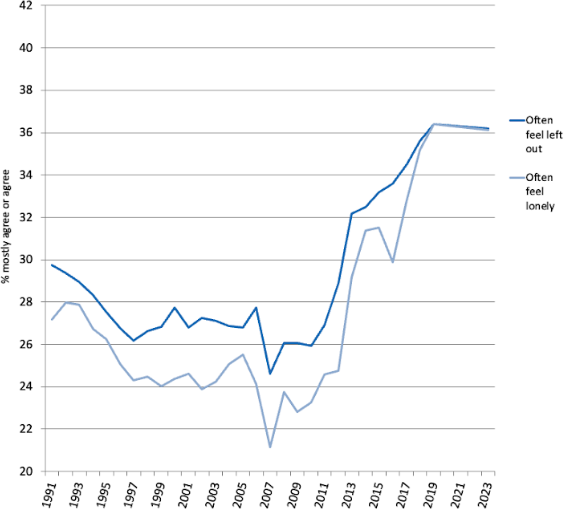
But how exactly would parasocial relationships help ease loneliness? Well, when people have these constant one-sided interactions with online or public figures, they start to feel like they know the person. This celebrity or influencer can offer this person a feeling of friendship that they might not be experiencing in their everyday lives. That disconnection they feel to the people around them can be replaced by the connection they have to a certain figure.
This relationship they have can also offer the person a sense of identity or even community. This is especially true of younger people, who are actively developing their identity and looking for a place where they can belong. If a young teenager feels like they might have trouble making friends or experiences bullying, they might turn to the fan-base of their favorite artist, actor, or fictional character. They are surrounded by like-minded people who already have something in common with them.
Perhaps the most notable example of parasocial relationships today is between some fans and Taylor Swift. When she announced her engagement in late August to football player Travis Kelce, some swifties found themselves in tears over her finally getting a ring. This raised some eyebrows from the general public, who commented on the matter by stating that they do not know who she is, only know the persona of Taylor Swift, along with the fact that she also does not know them. It showed how close people can feel and how emotionally attached fans can get to their favorite music artist.
However, these relationships can also become harmful. There have been many examples of celebrities being stalked and harassed, and receiving death threats by obsessed fans. In some tragic cases, this may even lead to murder by someone who would call themselves their ‘biggest fan.’
With the general rise of loneliness in Americans, people who feel distant and don’t have a strong social-emotional well-being can seek solace in someone they might relate to and begin to feel like they and that person are friends. The connection they make with this figure can make up for the lack they have in day-to-day life, and be what they find as a solution for loneliness. Obviously, this is an unhealthy solution for an ongoing epidemic of loneliness.
The following resources were cross-referenced for this article.
Cafolla, Anna. “What Is a Parasocial Relationship?” Vogue, 16 Dec. 2024, www.vogue.com/article/what-is-a-parasocial-relationship.
Divya Vadlakonda. “The Rise of Parasocial Relationships Calls for the Moderation of Media Consumption.” The Saratoga Falcon, 2025,
saratogafalcon.org/19456/opinion/the-rise-of-parasocial-relationships-calls-for-the-moderation-o f-media-consumption/. Accessed 2 Oct. 2025.
Batanova, Milena. “Making Caring Common.” Making Caring Common, 3 Oct. 2024, mcc.gse.harvard.edu/reports/loneliness-in-america-2024.