

By Lyra Stoyas, Staff Writer
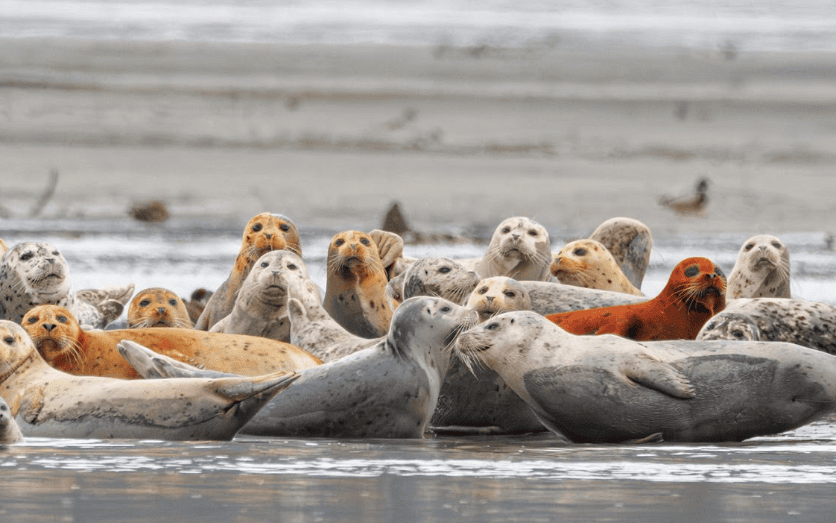
On social media platforms and online forum posts about orange seals, online users routinely express concerns for the seals’ health and the quality of the water.
In various coastal towns, residents and beachgoers frequently voice alarm upon spotting the abnormal coloring of marine animals resting on local shores and mudflats.
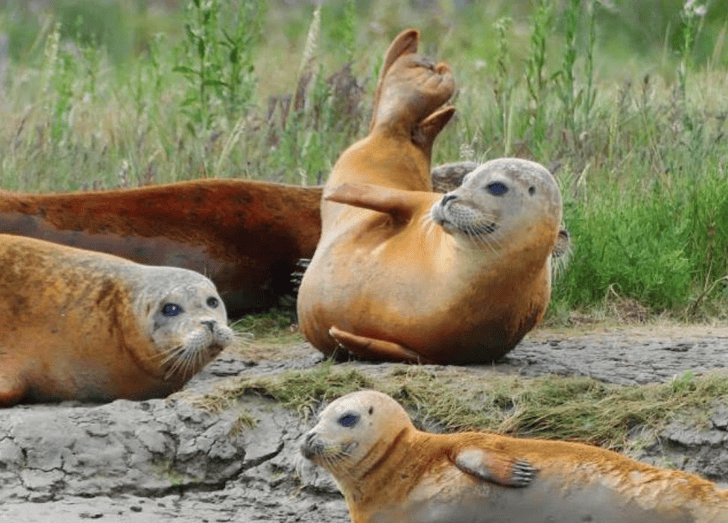
Despite concerns in surrounding communities, the rust-colored coats of harbor seals are an entirely natural phenomenon. Scientific research has soundly debunked people’s anxieties. The sole cause of this striking coloration is a harmless, external reaction involving iron oxide – essentially common rust – found naturally in the regional mud and rocks the seals come into contact with.
While many wildlife color variations are typically genetic conditions that animals are born with, an animal’s environment can also cause non-genetic pigment changes. For instance, conditions like albinism (a total lack of melanin) or leucism (a partial loss of pigmentation) alter an animal’s appearance from birth. Conversely, the orange coats seen on harbor seals are proving to be purely environmental. The iron minerals bind to the external hair shafts rather than changing the genetic structure of the fur itself.
One online post previously claimed, “It’s unique to Essex and southeast England where there are salt marshes.” This local myth has since been proven incorrect, as the phenomenon occurs in numerous distinct ecosystems around the world, such as the salt marshes of Essex, England, and the coastal bays of San Francisco, California, parts of Norway, etc.
Beyond the United Kingdom, “rusty” seals are a common sight in the San Francisco Bay Area and across various coasts in Alaska. In fact, research conducted by local marine scientists shows that anywhere from 4% to 32% of the local seal population display a red pelage. Red fur has been observed across all ages and sexes of harbor seals, with the exception of seal pups.
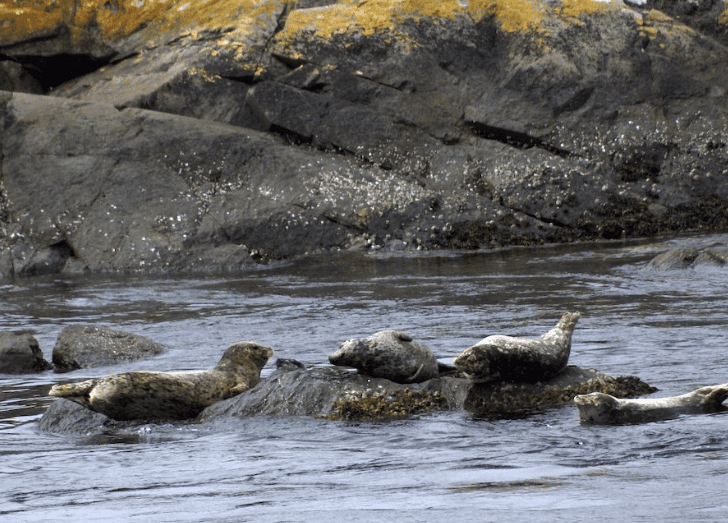
The unique staining is primarily caused by a specific behavior of benthic foraging. In these excursions, harbor seals hunt bottom-dwelling prey by digging beneath the sand in shallow, sediment-rich waters. When digging into the soft sand, they come away with rich deposits of iron monosulfide, which thrives in low-oxygen environments underwater. When it comes into contact with air, it rapidly oxidizes and precipitates the iron oxide directly onto the hair.
Irregular environmental factors can further accelerate this process. Strong seasonal winds or regional runoff can resuspend iron-rich sediments and minerals in the water column. In regions like Alaska, thawing permafrost is flushing minerals into coastal rivers. The geological shift has become a trend so prevalent that some waterways are now referred to as “rusting rivers.”
Harbor seals aren’t the only species affected by this mineral phenomenon. In Svalbard, Norway, there have been documented cases of bearded and ringed seals adopting a rusty coat as well.
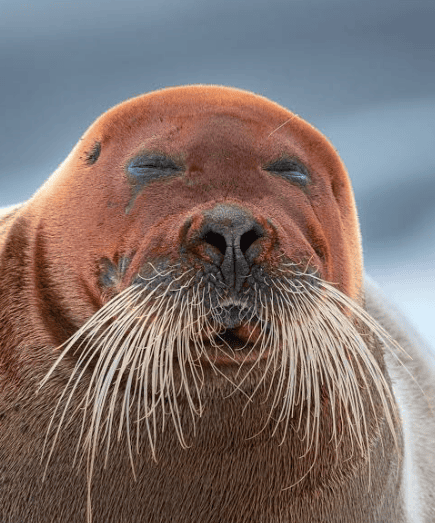
Bearded seals have a much heavier reliance on benthic prey, making them more commonly brighter and deeper shades of orange. Furthermore, iron oxide isn’t the only mineral binding to the fur; testing fur samples has also identified high concentrations of other natural trace minerals, specifically vanadium and manganese.
Fortunately, organizations like the Essex Wildlife Trust have confirmed that the iron oxide has no adverse health effects on the animals. The rust layers act simply as a temporary dye. Harbor seals undergo an annual molt, where they will safely shed their fur along with the iron oxide staining and return to their normal coloration – at least until their next benthic hunting trip.