

Written by Emma Goad, Staff Writer
Learn of the folklore of Samhain (sow-un), or Pagan New Year, the common misconceptions surrounding it, and how one can celebrate it in a modern setting.
The Celtic origins of Samhain, or Halloween, are often discussed during the month of October. However, the true meaning is often given a very surface level explanation. Most times this holiday is characterized as a time known for honoring ancestors or carving pumpkins, but these are all modern interpretations and not quite what was originally practiced. The traditional origins of Samhain and its celebrations are far more captivating and deeper than plain horror and death.
One of the most important symbols for Samhain is it’s name and the meaning surrounding it. The name Samhain means “November” in Irish and “summers’ end” in Scottish Gaelic. Samhain is meant to be celebrated at dusk on October 31 to dusk on November 31 for the Northern Hemisphere and dusk on April 30 to May 1 for the Southern hemisphere. This is because the holiday relies on the changing of the seasons and the darker months of the year. Samhain is also one of the four Celtic Fire Festivals that take place throughout the year. Some practitioners celebrate this holiday at the solar midpoint between the Autumn equinox and the Winter solstice, or at the second new moon after the Autumn equinox. This date is usually decided when the person celebrating actually begins to see the seasonal changes in their environment. Samhain marks the end of the harvest season and it’s final harvest festival out of the other three that takes place and the beginning of winter.
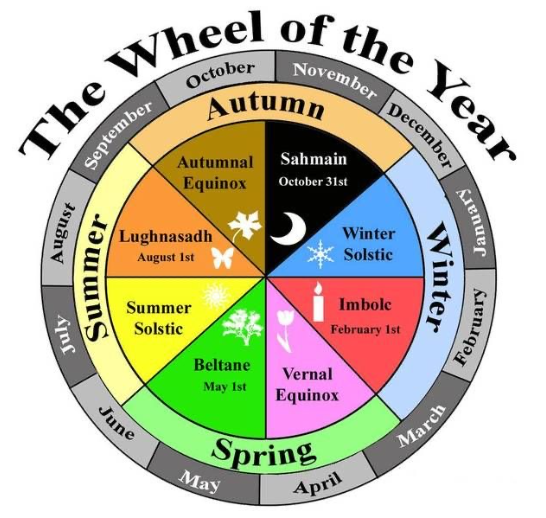
Samhain also carries many other themes such as crossroads, mourning, survival, protection, purification, and wisdom. It is also a threshold moment where the physical and spiritual realms draw closer together. This is where one will often hear the phrase “the veil is thinning” the worlds of the living and dead. While this particular phrasing of the thinning veil is more modern, it captures an ancient understanding that this time of year is very spiritually significant. Most modern practices refer to Samhain as “The New Year”, which is not entirely adjacent to what the celebration was; however this theory became popular enough to shape modern perceptions. Of course, antiquity does not equal authenticity so it is generally agreed upon to do and say whatever feels the most correct to those of whom are practicing.
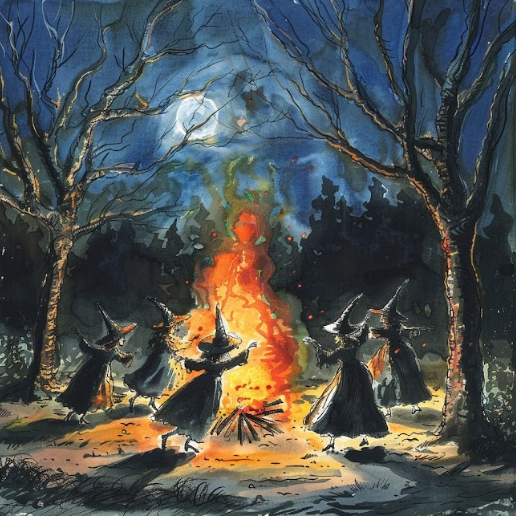
Samhain is deeply rooted in Celtic tradition, especially in Gaelic Ireland and Scotland. The festival marks a significant turning point in the year, not just seasonally but also spiritually. In a practical sense, it marked a time the ancestors were preparing for the winter ahead and survival.Once the harvest had been completed, any animals that would not survive the winter would be slaughtered and the unusable remains would have been burnt in what are called “bone fires”-which is where the word bonfire originates from. Burning these remains prevented any potential diseases but also allowed for these animals to be honored. During this, protection rituals would also commence to protect people against negative spirits. The extreme and almost sinister focus of honoring the dead for Samhain was heavily influenced by Christianity; Samhain originally focused on protection from the spirits and survival for the winter but it instead morphed into glorifying those who had passed.
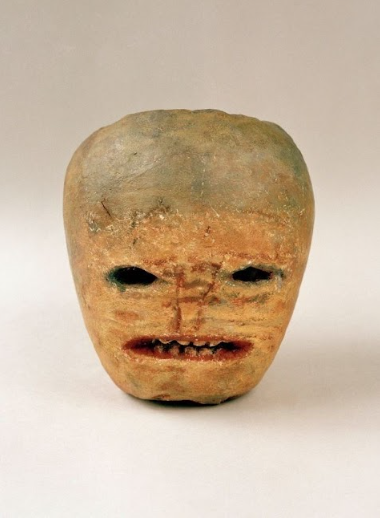
The practice of carving pumpkins or root vegetables also emerged from Samhain. The tradition of carving root vegetables was originally done to deter negative spirits; pumpkins are not native to the Celtic regions so vegetables such as turnips or other root vegetables were instead used. One can also use them in the meals they cook during this time to avoid food waste. It is also important to mention that leaving anything carved outside can be damaging to wildlife, so it is encouraged to keep them out of reach from animals on the ground or bring them in as soon as one notices animals eating them.
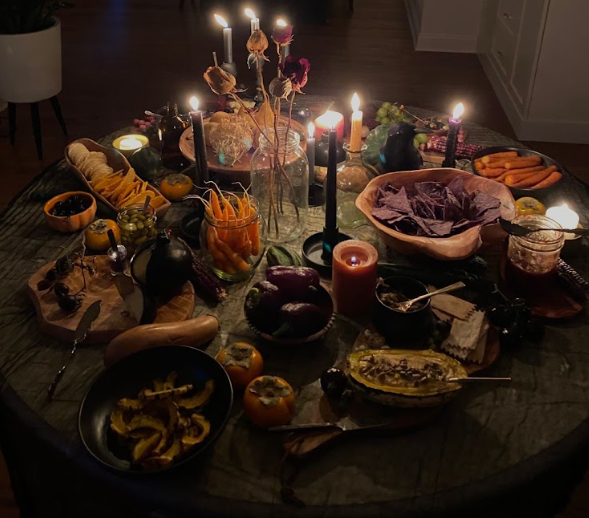
Samhain is accessible for all to celebrate and honor and is not a closed practice. However, ancestor veneration has become a major part of the modern celebration for this transitional period. One way to connect to this tradition is making an ancestor altar. One can do this with various items, but the main objects would be photos from those who have passed, their belongings or jewelry, candles, incense, dried rose petals, and offerings. Passed relatives can also be honored by cooking their favorite meal, listening to their favorite song, or watching their favorite films. Some even do this by having a “silent supper” which is having a feast in complete silence to honor those who have passed.
As briefly mentioned, fire and light has been central to Samhain for a very long time and one can harness this aspect by having a gathering and a bonfire or even just lighting a candle. There is a common tradition in Samhain where if one leaves a candle in their window, it helps lost spirits who are around due to the thin veil to cross over. Divination (trying to understand the future via the supernatural) and spirit communication also are a part of the celebration and are considered to be powerful for this time, especially at midnight. A person can perform divination of their preference with tarot or oracle cards, pendulums, or scrying. They can also do dream divination where, before they go to bed, they ask for a specific sign from a loved one that has passed away to confirm something. But these things should only be done if the practitioner feels confident and well protected.
Protection and cleansing is rather important at this time of year, especially since the veil is thinning, and the world is turning towards the dark half of the year. One can perform regular cleaning of their home or oneself and this is highly encouraged for those seeking to participate in the festival. Some possible forms of this can be burning dried herbs like rosemary, common sage, or thyme. When performing any fire rituals it is imperative that one opens their window not only for ventilation but also for releasing stagnant energy. One can also create protective wards, amulets, or conduct spells if they have not done so already or even refresh them. Cleansing can also be done through simply decluttering one’s space.
Harvest feasts are also a common occurrence during Samhain given it is the last harvest festival. One can prepare a feast with seasonal foods, make bread or hearty stews. One possible idea is a potluck where everyone brings a seasonal dish. One can also just make a meal for themselves or order from a local restaurant that uses local produce; even going to a farmer’s market can be an alternative to this. During the feast, it is customary to look inward no matter if they are alone or not. This can be, if one considers this to be the Pagan New Year, to reflect on the year they’ve had and what they want to share of deceased loved ones. Even simply expressing gratitude for the harvest feast is accepted.
On Samhain, some other rituals include taking a reflective walk, burying an apple in the ground for passing spirits, or burning a letter of all things one wishes to release. However what is most important during this time is one’s intentions and also simply having fun and enjoying the season. No matter which holiday you are celebrating, it is still important to know its significance and history. Knowing where it came from brings a deeper understanding and joy for the holiday itself.