


Written by Emma Goad, Staff Writer
The characterization of vampires has changed dramatically over time. Read further to see how simple tweaks to a design can alter an archetype forever.
In the horror genre, there are four prominent costume categories when it comes to on-screen vampires, these being Dracula, the glampire, the cool vampire, and the sultry vampire. Overall, the most iconic of these is the Dracula design which was the catalyst for the hundred years worth of innovation that has occurred within this subculture.
Vampires are almost always given a distinct appearance on screen as their look needs to communicate that these otherwise human-looking beings are more than what meets the eye. This is often why vampires are given the striking appearance of albinism (very pale skin and red eyes) or abnormally long nails. These traits tell the audience that the character is inhuman long before the fangs emerge. Their costume also plays a large part in establishing their aura beyond these physical traits. One recurring design trend to see is either an extremely minimal or extremely maximal outfit. This comes from the same intention of separating the character from the protagonists and to clearly show that they are the antagonist.
Within the Dracula category, the first adapted novel, written by Bram Stoker, was adapted into an on-screen film in the movie Dracula’s Death (1921). This movie is often overshadowed by the movie Nosferatu (1922) , which was released shortly after and is generally considered to have more of a lasting impact due to establishing the now well-known vampire aesthetic. Despite the fact that, at the time, the German expressionism classic fought against the allegations of copying Dracula’s Death, it is now considered an unofficial retelling of the story. The only notable difference is the names of a few characters. As far as the production of the movie Nosferatu, there is minimal information specifically on its costume design, but one can see that the film has taken inspiration from Stoker’s own descriptions of his vampire. Stoker describes Dracula as a tall, thin man, with pointy ears, white hair, a long mustache, and long teeth, dressed only in black. The film’s art director and costume designer Albin Grau skipped out on the white hair and long mustache described in the book and opted for a hairless Nosferatu giving him a far less human appearance. He wears a dark suit with fitted pants and has disproportionately broad shoulders, creating his unnatural shape.
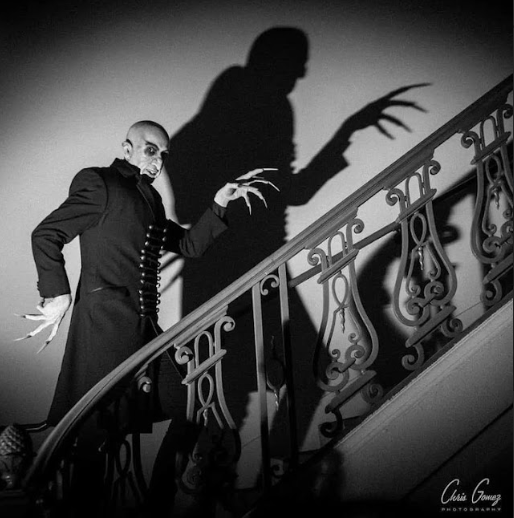
The overall effect of the outfit’s silhouette is a great example of the bold, distorted shapes, found across German expressionism. It creates feelings of suspense and curiosity as the sulking shadows hide the vampire. Despite the lack of documentation of the creation of this design, it is clear that it holds major authority over the iconography of vampires in film over the last one hundred years.
In 1924, the first stage adaptation of Dracula saw the character in a tuxedo and white shirt, deviating from Stoker’s all black illustration. The actor who played Dracula, Raymond Huntley, provided his own costume of a jazzy suit that reflects the evening wear of wealthy men in both the 1890s and the 1920s. This implied more closely the amount of luxury the immortal lives in and how Dracula was a man of stature and sophistication. 1931’s Dracula put this look to screen, solidifying the fame globally. This depiction has remained the most recognizable vampire archetype.
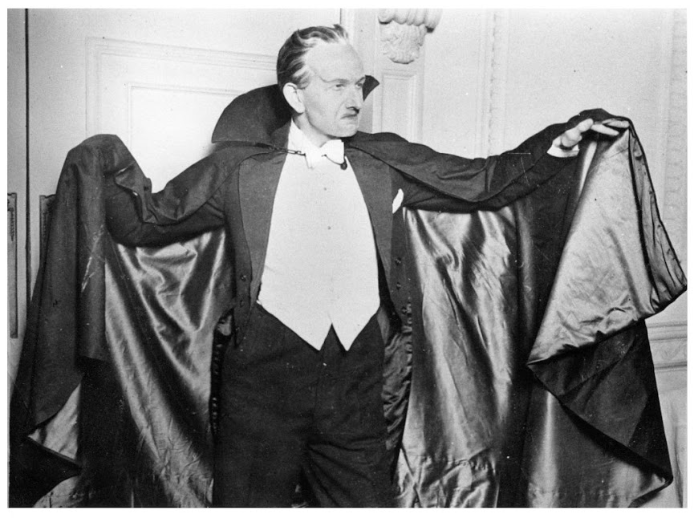
As the first Dracula film in color, Dracula (1958), is another evolution of its on-screen predecessors. While the white shirt is subtle and kept from the previous film, it introduced a flash of red along the lining of the cape which was an obvious nod to blood and was quite eye-catching to audiences.
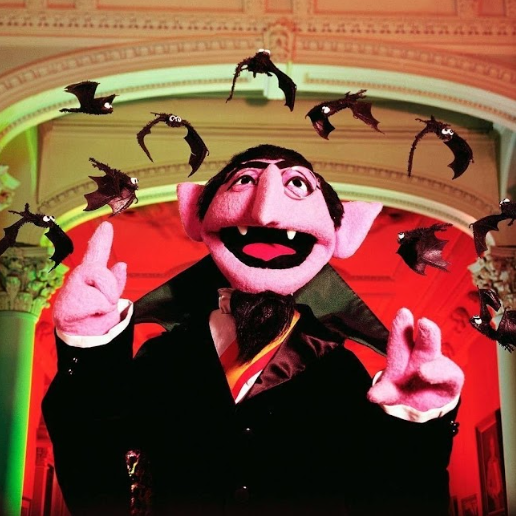
From there on, the 70’s saw an onslaught of on screen Dracula characters which mostly fell into the suit-and-cape archetype. Through the 2000s, it remained a classic style of vampire costuming from Van Hing to Netflix’s Dracula. More recently, it can be seen in Renfield (2023) where the costuming takes clear inspiration from the centuries worth of cinematic Draculas before it. Of course, there also is the forever iconic iteration of Sesame Street’s own Dracula, The Count.
The portrayal of vampires within the Dracula model was the beginning of an ever changing aspect of the horror genre. More than one hundred years later it is still being built upon and revitalized in a way that causes a parallel between the vampires as immortal, mythological, beings and their legacy of undying creatures. No matter what form Dracula can take, the vampire archetype will continue its undying legacy no matter the outfit.